
Presented by
Last Friday marked 25 years since September 11, 2001.
A quarter of a century. Long enough that there are engineers on your plant floor who weren’t born yet. A day that not even the person writing this was old enough to remember.
Nearly 3,000 people died that day in 2001. Mothers, fathers, daughters, and sons. 343 Firefighters would enter the twin towers to help save those trapped, and would never return. Many more brave souls- who wouldn't call themselves heroes- sacrificed themselves to save others. 1,000 families would never get the closure of a burial for the person they lost. It would take almost a year to go through the wreckage. For those with morbid curiousity, there is no shortage of stories of the heroes from that day, of phone calls and voicemails from the victims, and pictures and videos of the destruction.
It’s worth noting that a lot of what this newsletter covers every single week — the advisories, the agency that publishes them, the whole idea that a water plant or a substation is something a country has to actively defend, took its modern shape in the years right after that morning.
I bring this up as a stark reminder of what has happened and what can happen. No one who went into work that day knew how the day would end. Take a moment and say a small prayer for the families still hurting, and live a day for the victims who never got to live another. We are all given the ability to do great things, no matter how small that greatness might seem. For many of us, that is manifested in our efforts to help manufacturers do more with less so that we can save and create more jobs, improving the lives of the people in our community, our state, our nation, and our world.
Back to the world of manufacturing... here’s what caught our attention:
HiveMQ Just Became an “Industrial AI Platform.” Sparkplug Didn’t Make the Announcement.
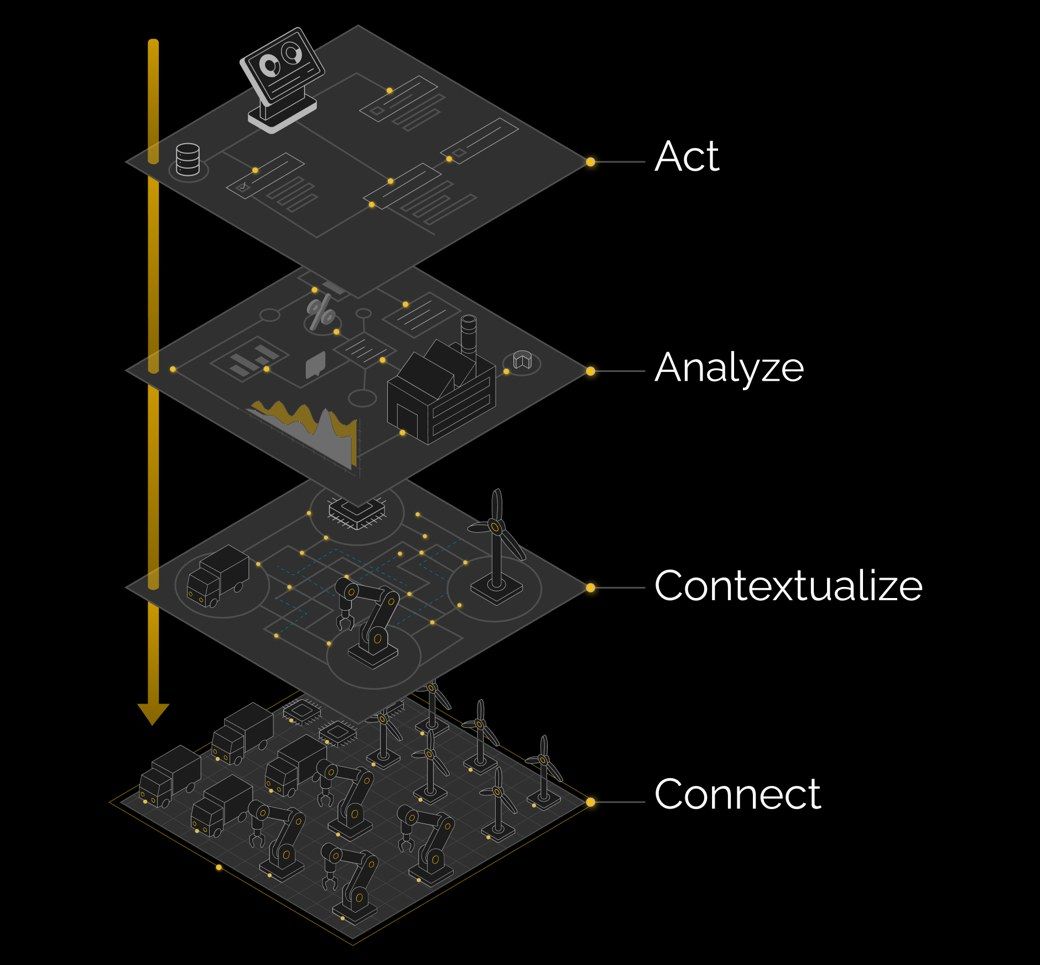
HiveMQ launched HiveMQ Platform on September 9, repositioning itself from MQTT broker company to — their words — the industrial data platform for agentic AI.
Members of our own Discord noticed within hours what wasn’t in it.
The details:
- The platform is built on four pillars: Connect (a real-time backbone across OT and IT), Contextualize (consistent data models and governance), Analyze (calculate KPIs and surface deviations while operations are running), and Act (governed, human-supervised workflows).
- It’s available now, with a free tier to start.
- HiveMQ leans on its track record — 12-plus years of MQTT running in mission-critical environments.
- The announcement does not mention Sparkplug. It doesn’t mention unified namespace by name either.
- HiveMQ has been one of the loudest, most consistent Sparkplug advocates in this industry for years.
Why it matters for manufacturing: Sparkplug is the open specification that makes MQTT payloads self-describing — birth certificates, state management, a defined topic namespace. It’s the thing that lets you swap a broker without rewriting every subscriber you own.
Contextualization is exactly the layer Sparkplug standardizes.
So when a vendor builds a platform whose second pillar is contextualization, and the open spec that standardizes contextualization doesn’t appear in the launch, that’s worth a question. Not an accusation — a question.
To be fair: absence from a press release is not removal from a product. HiveMQ still ships Sparkplug support. But press releases tell you where a company is pointing, and this one points at a proprietary contextualization layer sitting on top of an open transport.
Real-world scenario: You standardize on the platform. It works. Two years later your asset models, your KPI definitions, your governance rules, and your workflows all live inside their contextualization layer.
Now go price your exit.
The bottom line: The question isn’t whether HiveMQ’s platform is good — it probably is. The question is whether the data model is yours or theirs. Before you sign anything, ask three things: Can I export the full contextual model in an open format? Does Sparkplug still work end-to-end? If I leave, what do I take with me besides the raw tags?
If the answer to any of those is a sales call, you have your answer.
A CVSS 9.2 in a Safety Controller — and the Weeks Before You Can Patch It

September’s ICS Patch Tuesday landed this week, and the headline number is ugly: CVE-2026-3869, CVSS 9.2, an authentication vulnerability in Schneider Electric’s Modicon M580 and M580 Safety controllers.
The details:
- Schneider Electric: 4 new advisories plus 4 updated. The M580 auth flaw is the most severe newly addressed issue.
- Siemens: 9 new advisories plus 9 updated, including four critical — Reyrolle 7SR5, Open Interface Services, Industrial Edge Management, and SIMOVE. Siemens also patched a Linux kernel issue (CVE-2026-31431, CVSS 7.8) that permits root shell access.
- Aveva: one advisory covering four flaws in Pipeline Integrity Monitor. Two are worth reading twice — a hardcoded encryption key, and MD5-hashed passwords that let administrative credentials be reverse-engineered.
- Rockwell Automation: nine advisories published the week prior, covering RSLinx Classic (four critical/high denial-of-service flaws that crash the service until someone restarts it), FactoryTalk Historian ME (remote code execution), FactoryTalk Activation Manager (privilege escalation), and ControlFLASH (CVE-2026-12663, CVSS 7.3).
Why it matters for manufacturing: Start with the M580 Safety line. That’s the controller whose entire job is to stop the process when something goes wrong. An authentication weakness there isn’t an IT problem with an operational side effect — it is the operational problem.
Then look at the Aveva findings. A hardcoded encryption key and MD5 password hashing in 2026 aren’t bugs that slipped through code review. They’re design decisions someone made, and nobody revisited.
And the ControlFLASH issue isn’t really a code flaw at all. The installer grants Everyone and BUILTIN\Users write access to its own installation directory. Plant a malicious DLL, wait for an engineer to flash a controller, and it executes at their permission level.
That last one you can fix this week. Without an outage. Without touching a controller.
Real-world scenario: Your next planned shutdown is in November. The advisory went public this week, and so did the CVE. That’s ten weeks where the vulnerability is documented, the patch exists, and your controller is running the old firmware because the line can’t stop.
That gap is the actual risk surface. Not the CVE — the calendar.
The bottom line: Sort this week’s advisories into two piles. Pile one is what you can fix without an outage window: the ControlFLASH directory permissions, running it under non-administrative accounts, application allowlisting on engineering workstations. Do those now. Pile two waits for a window — and everything in pile two needs a compensating control and a date on it, not a shrug.
Knowing which pile each exposure belongs in is the whole job.
Enterprises Are Doing the Math on Open-Weight Models — and Some Are Pulling AI Back In-House
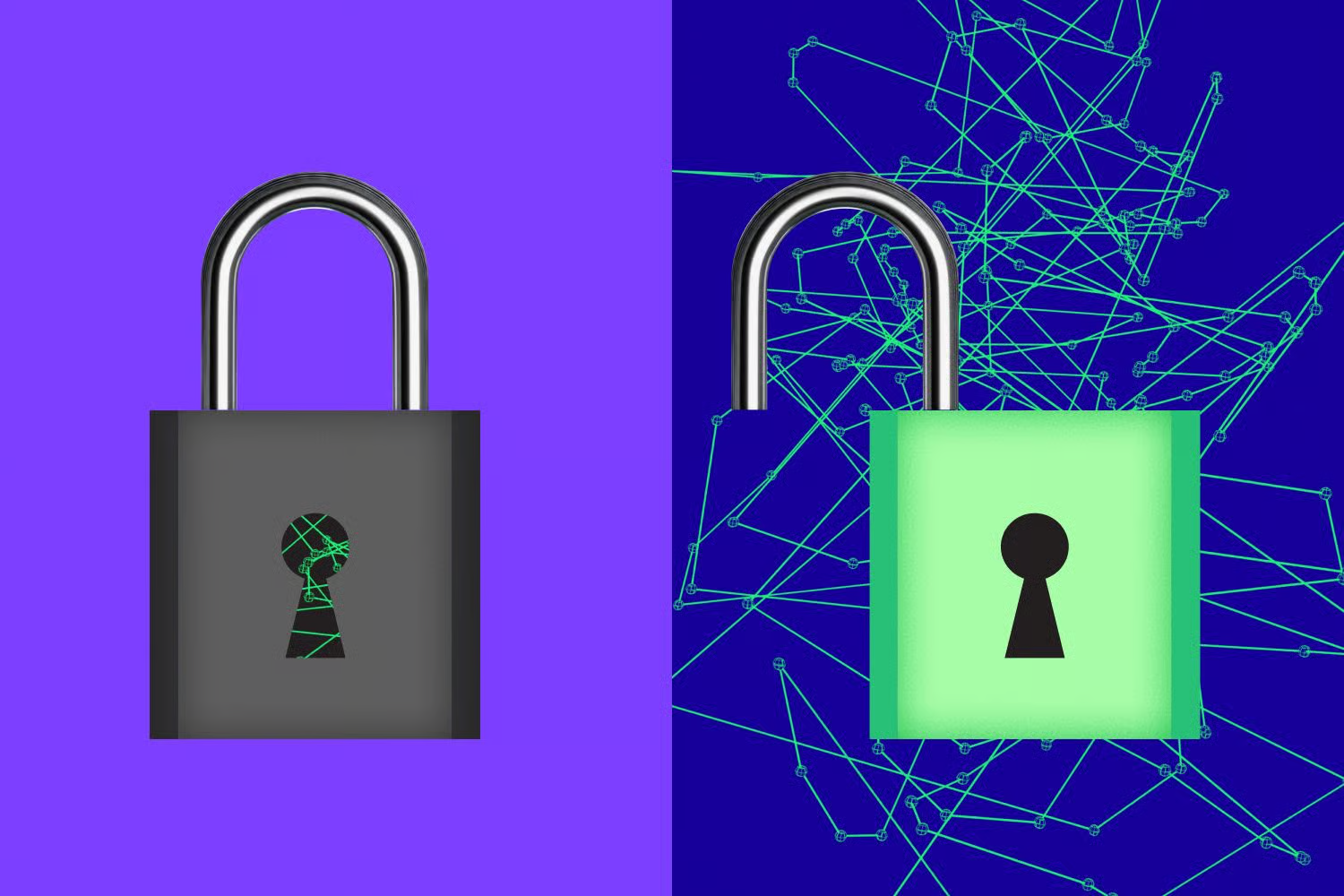
AI bills are coming due, and a growing number of engineering organizations are asking an uncomfortable question: do we actually need to rent this?
The details:
- Companies facing climbing AI costs are seriously evaluating open-weight and open-source models as alternatives to the frontier labs.
- Fitz Nowlan, VP of AI and architecture at SmartBear, is running an extended experiment to find where open-weight models make financial sense for his organization — not as a philosophical stance, but as a workload-by-workload calculation.
- Named candidates include Z.ai’s GLM-5 and DeepSeek v4.
- The draws Nowlan cites: cost efficiency, lower latency, and avoiding the risk that a major lab eventually ships a product that competes with yours.
- These models are free to download and run wherever you want them.
Why it matters for manufacturing: That third reason lands harder in industrial software than almost anywhere else. If your AI vendor’s roadmap is drifting toward MES features, you’re funding your own competition.
But two other factors hit even harder on the plant floor.
Latency. A round trip to a cloud API is fine for a chatbot and useless for scoring a vision inspection at line rate. Inference that runs on a box in your server room doesn’t care about your WAN.
Data residency. Your process parameters, your recipes, your defect images — these are the crown jewels, and they’re exactly what you least want sitting in someone’s retention window. Our #ai-and-ml channel spent most of last week on this exact problem.
Now the honest part: open-weight is not free. You’re trading an invoice for hardware, headcount, and an ops burden that doesn’t show up on a quote. Somebody patches that box. Somebody handles the GPU. Somebody owns it at 2 a.m.
Nowlan is running an experiment rather than making a declaration, and that’s the right posture. The answer is workload-dependent.
Real-world scenario: Your quality team wants an LLM to summarize defect reports and cluster recurring failure modes. Via cloud API it’s pennies a call — and every defect image leaves your network. Self-hosted on an open-weight model it’s a capex line, a GPU, and an internal service to maintain — and nothing leaves the building.
Neither answer is automatically correct. But only one of them is usually evaluated.
The bottom line: “Open-weight” isn’t purely a cost decision or purely a security decision. In manufacturing it’s both, and unusually often they point the same direction. Run the numbers against your actual traffic before you take a position — and count the ops burden honestly when you do.
Presented by IIoT.University
If you’re getting started with MES, the biggest mistake is thinking you need to begin with a massive, multi-year implementation.
You don’t.
MES Bootcamp 2026 is built around a much more practical starting point: solve the core manufacturing problems first, prove value on a single line, and build from there.
Across two days, Walker Reynolds breaks MES down around the “Core Four”:
- OEE
- Work Order Management
- Scheduling
- Downtime Tracking
Every lesson runs against a single-line MES scenario using a real stack — Ignition, PostgreSQL, CoreFlux, UNS Studio, and Notus — so you’re watching decisions get made, not features get listed.
You’ll also see how AI fits on both ends of the MES lifecycle: accelerating design and integration up front, then becoming part of the operational system once MES is running.
The goal isn’t another MES feature checklist. It’s showing you where to start, what actually matters, and how to avoid turning MES into a multi-year, multi-million-dollar science project.
MES Bootcamp 2026
October 20–21, 2026
9:00 AM–1:00 PM CDT · Live online
$1,999 — Early Bird $1,499
Smart Model Routing: The Cheapest AI Upgrade Most Teams Haven’t Made
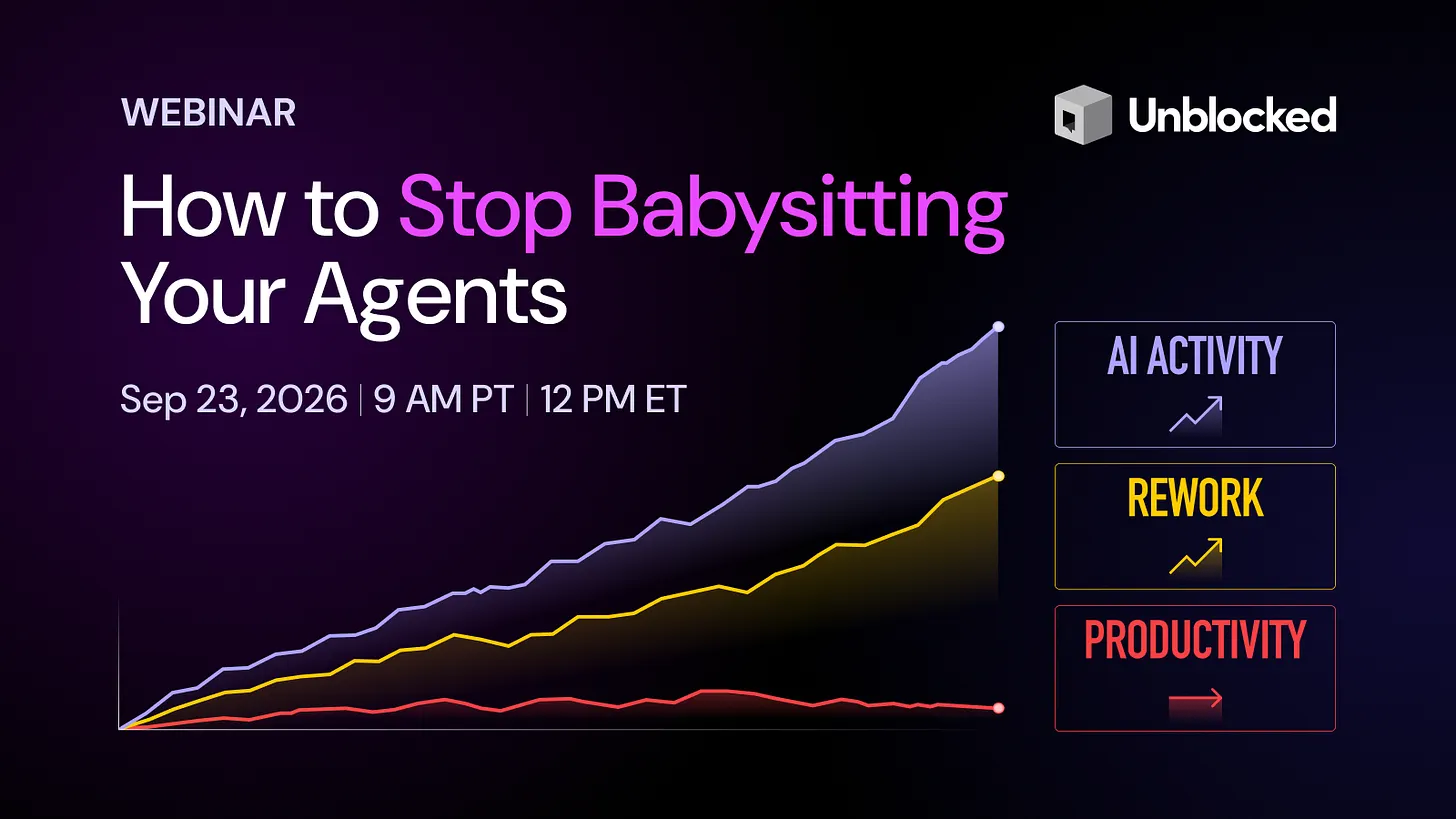
If the last story was about which models you run, this one is about not sending every single request to the expensive one.
The details:
There are four common routing approaches, and they trade off differently:
- Small model classifier — a cheap model grades each incoming request as easy, medium, or hard and returns a routing decision. Costs very few tokens because both the prompt and the answer are short.
- Cascading (try-first) — attempt it with the cheap model, escalate only if a quality check fails. Works best when answers can be validated automatically.
- Semantic routing — convert the request to embeddings and match against known categories. Good at identifying intent, unreliable at judging reasoning difficulty.
- Learned routing — a classifier trained on your own history. Most accurate, but it needs a real evaluation dataset before it’s worth anything.
And the math that makes it worth the trouble. Assume a premium model at 1 cent per request, a small model at 1/20th that, a medium at 1/5th. Assume your traffic is 85% easy, 10% medium, 5% genuinely complex:
(0.85 × 0.05) + (0.10 × 0.20) + (0.05 × 1.00) = 0.1125
That’s roughly 11% of what you’d pay routing everything to the flagship — close to a 10x reduction, with the hard questions still going to the model that can actually answer them.
Why it matters for manufacturing: Plant AI traffic is severely skewed, and almost nobody prices for it.
“What was Line 3’s OEE yesterday?” and “Summarize this downtime reason code” are not the same class of problem as “Analyze six months of vibration data and tell me what’s about to fail.” The overwhelming majority of what people ask a plant assistant is a lookup. Most plants pay flagship rates for every one of them.
The cascade pattern fits manufacturing particularly well, because so many of our outputs are automatically checkable. A tag query returns a number or it doesn’t. A structured extraction matches the schema or it doesn’t. When you can verify cheaply, try-cheap-first costs you almost nothing to attempt.
Three ways routing goes wrong, and the third one should get your attention:
- Under-routing — a hard request goes to a weak model and returns a confident wrong answer.
- Over-routing — easy work lands on the expensive model and your savings evaporate.
- Manipulation — if your routing rules live in a prompt that user input can influence, users can escalate themselves into the expensive model. Routing logic belongs in trusted application code, never in user-supplied text.
That third failure is the plant-floor version of a much bigger problem: you built an access control out of a prompt, and prompts negotiate.
Routing also degrades quietly over time — when models get updated, when pricing changes, when your evaluation starts rewarding fluent answers over correct ones.
Real-world scenario: Your maintenance assistant handles 400 queries a day. Roughly 340 are lookups. About 40 need real context. Maybe 20 need genuine reasoning across historical data.
Right now all 400 go to the flagship model, and you’re about to have a conversation with finance about it.
The bottom line: The cheapest capability upgrade available to most teams right now isn’t a better model. It’s not paying flagship rates to answer “what’s the current setpoint on Tank 4.”
From the Floor: A Week in the Community
The week of September 7–13 in the 4.0 Solutions / Industry 4.0 Discord went deep rather than wide. Long technical threads, most of them still open — which is usually the sign of a good question.
The LLM security argument that’s really an ownership argument: #ai-and-ml carried the week’s deepest thread — how to secure prompts sent to cloud providers, whether self-hosting beats cloud on cost, and whether vendors are quietly building training profiles from enterprise usage. The idea that kept surfacing was the “knowledge lake”: keep your organizational knowledge in structured assets you own rather than in someone’s model. Nobody resolved it, and that’s because it isn’t resolvable yet — but it’s the right argument to be having.
HiveMQ launched, and the room noticed what was missing: over in #🔗-content-links, the new HiveMQ platform went up and members almost immediately flagged that Sparkplug doesn’t appear on the website — from a company that has been one of Sparkplug’s most visible champions. If that sounds familiar, it’s because it’s the first article in this issue. The community got there before we did.
UNS goes underground: #unified-namespace and #💬-general fielded a request for an underground mining UNS reference architecture. HiveMQ, Cirrus Link, and MongoDB examples got shared as adaptable starting points, but nobody produced a mining-specific model. That thread is still open — if you’ve built a UNS below grade, go say something.
Interfaces over products: #digital-transformation kept up the pushback against “one-throat-to-choke” vendor strategies, with the sharpest version of the argument being that you should mandate interfaces, not products. Given everything else in this issue, that one aged well over about four days.
Also worth a look: #💬-general ran a “what’s a lesson you learned the hard way?” thread that pulled in analysis paralysis, IT/OT turf wars, and CNC safety. And four new members landed: gobergram (Jr. Solutions Engineer, IIoT for oil & gas, Venezuela), monikerov (electrical design, UL 508A panels, Siemens PLC, full-stack dev), Akshat (Overview AI, AI vision systems for manufacturing), and Stephane Bouchard (dxpert.ai). Say hello.
If you’re at IMTS this week: community member M. R. McCormick is demoing a digital shadow/twin for drone manufacturing built on Nvidia Isaac Sim at booth #236700. There’s also a free webinar December 3–4 on building digital shadows with open tools.
Friday Wins is back this week. Bring something you shipped, fixed, or finally got working — it’s consistently the best hour on the server.
Not in the room yet? Come hang out in the Discord → — that’s where the real work gets argued out.
Byte-Sized Brilliance
Here’s one that bookends the week.
Modbus turns 47 this year. Modicon built it in 1979 so its PLCs could talk to things — and it wasn’t open. It was a vendor protocol, like every other vendor protocol of its era.
Then in 2004, Schneider Electric, which by then owned Modicon, handed the protocol to an independent organization and made it royalty-free.
That’s the part worth sitting with.
Schneider gave it away. Twenty-two years later, Modbus is still running in substations, water plants, building systems, and roughly every piece of industrial equipment with a serial port on it. Meanwhile an entire generation of proprietary fieldbuses — the ones with better specs, bigger marketing budgets, and a vendor standing behind them — are footnotes in old trade magazines.
The protocol nobody could monetize is the one nobody can kill.
Worth keeping in mind this week, while a show floor full of very nice people explains why their platform should hold your data model.
Let us know how we're doing! https://forms.gle/zSXrKTK9BNZ3BrpXA

Responses