
Presented by
Labor Day is one of those holidays that means something a little different depending on where you’re standing.
For some people, it’s a three-day weekend.
For manufacturing, it’s also a pretty good reminder that the conversation around technology has never really been about replacing people with machines.
It’s about what kind of work we’re asking people to do.
This week’s stories hit that from a few different angles.
Nissan is handing more material movement over to autonomous robots. P&G is using AI to make better decisions about what demand will look like before production ever sees the schedule. FANUC is pushing “Physical AI” deeper into mainstream industrial automation. And Schneider Electric says it wants to make the DCS more open and software-defined — which, given where the industry has been, is worth watching with a healthy amount of skepticism.
The common thread is pretty simple:
The factory is changing, but the goal hasn’t.
Make the work safer. Make the decisions better. Make the systems easier to change. And stop wasting skilled people on problems technology should already be able to solve.
That feels like a pretty fitting place to start on Labor Day.
Here’s what caught our attention:
Nissan Is Letting Robots Run Material Flow — and They’re Learning on the Job
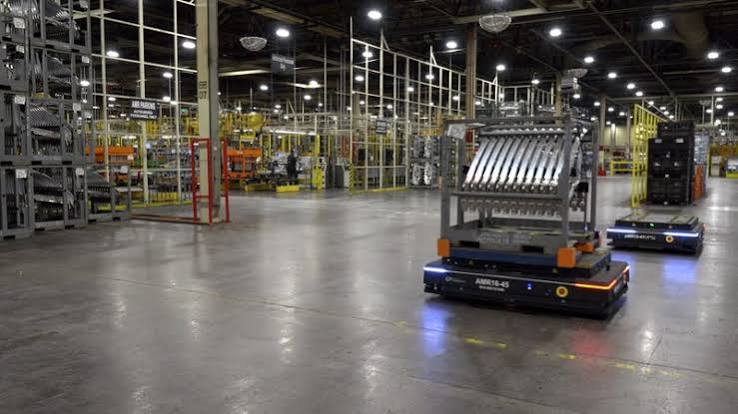
Nissan is rolling out autonomous mobile robots at its Smyrna, Tennessee plant to move heavy parts through the body shop — and this isn’t a trade-show demo. These robots are being put directly into the material flow that keeps production running.
The details:
- Nissan is deploying OTTO autonomous mobile robots from Rockwell Automation, starting in the Smyrna body shop as the first of six planned rollout phases.
- The largest units can carry up to 4,190 pounds and navigate using lidar, cameras, and sensors instead of following magnetic tape or fixed paths.
- The robots can reroute around people and obstacles, adjust deliveries based on what’s happening in production, recharge themselves, and coordinate work across the fleet.
- If one robot falls behind, another can be dispatched to help keep material moving.
- The deployment will take over material-handling work currently performed by 64 forklift and tugger operators. Nissan says those workers will be reassigned or retrained rather than laid off.
- And it hasn’t been perfect. Early in the rollout, software actually dispatched two robots to the same location at the same time. Nissan and its software partners had to work through the problem before continuing to scale the system.
Why it matters for manufacturing: This is what “Physical AI” starts to look like when you remove the humanoid robot from the conversation. Nissan isn’t asking a robot to imitate a person. It’s giving software control over a specific industrial problem: get the right material to the right production cell at the right time without requiring a human to drive it there.
That distinction matters. Factory logistics is full of decisions that change minute by minute — a cell gets backed up, an aisle gets blocked, production falls behind, or one delivery suddenly becomes more important than another. Traditional automation works great when everything follows the script. Autonomous systems become interesting when they can respond when the script changes.
Real-world scenario: A body shop cell is burning through parts faster than expected while another cell has stopped. Instead of two forklift drivers figuring out the priority over the radio, the material-handling system recognizes the change, reroutes the next delivery, and shifts another robot into the workload.
The bottom line: The interesting part isn’t that Nissan bought robots that can move 4,000 pounds. It’s that Nissan is starting to hand the decision-making around material movement over to the system itself. And the fact that they’ve already had to work through robot traffic jams is exactly why real factory deployments matter more than perfectly scripted demos.
P&G Is Running 20 AI Models a Day to Decide What Demand Looks Like Six Weeks From Now

P&G is using AI to solve one of manufacturing’s oldest problems: figuring out what customers are actually going to buy before production has to make it.
For products like Charmin and Bounty, P&G’s Intelligent Daily Forecaster runs 20 different models every day, compares their performance, and uses the lowest-error model to forecast demand six weeks out.
The details:
- P&G uses three different internal forecasting systems depending on the planning horizon and problem it’s trying to solve.
- Its Intelligent Daily Forecaster evaluates 20 models every day against the next six weeks of demand and automatically selects the model producing the lowest forecast error.
- A separate long-term demand sensing system analyzes three years of sales history to identify seasonality, trends, and outliers.
- Another system, called Cannibalizer, calculates how promotions at one retailer affect sales at competing retailers. If Costco runs a major promotion, for example, the system estimates how much of that demand is actually being pulled away from Walmart, Target, and other stores instead of representing new demand.
- P&G is also using regression models to identify signals that could indicate abnormal buying behavior before orders spike, using lessons from events like COVID-era toilet paper shortages, port strikes, and tariff-related purchasing.
- The forecasting models don’t just depend on sales history. P&G says inventory levels and actual production throughput also have to be part of the equation.
Why it matters for manufacturing: Forecasting sounds like a supply-chain problem until the forecast is wrong. Then it becomes a manufacturing problem.
Bad forecasts turn into excess inventory, overtime, expedited material, missed orders, unnecessary changeovers, and production schedules that get rewritten every few hours.
What P&G is doing differently isn’t simply using AI to generate another forecast. It’s allowing multiple models to compete continuously and choosing the one performing best for the current conditions.
That matters because there is no single forecasting model that is always right.
Real-world scenario: Your ERP says demand for Product A will remain flat for the next six weeks. But retailer promotions, inventory drawdown, and actual production throughput are all pointing in another direction. Instead of waiting for orders to prove the forecast wrong, the forecasting system detects the shift early enough for planning and production to react.
The bottom line: AI doesn’t have to run a machine to affect the factory floor. If it can produce a better answer to “what should we make, how much should we make, and when should we make it?” then it changes everything downstream — scheduling, inventory, labor, changeovers, and ultimately how efficiently the plant runs.
FANUC Is Bringing “Physical AI” Into Mainstream Industrial Automation
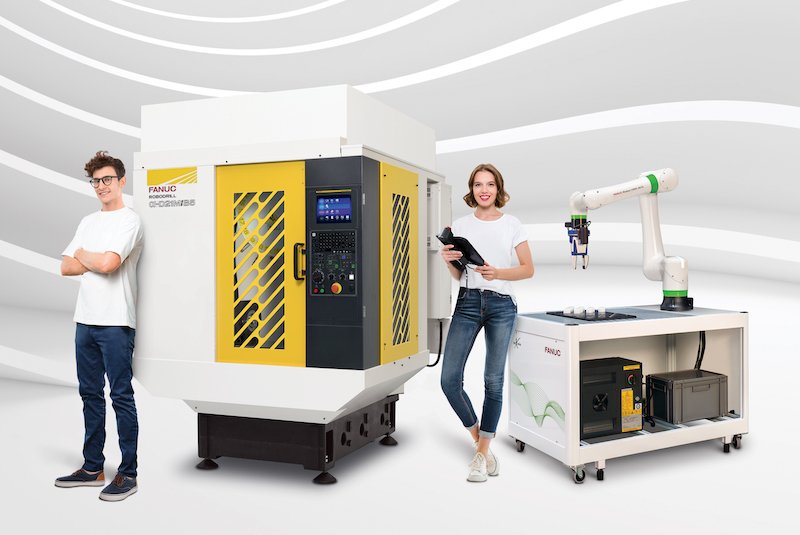
FANUC is putting a name to something the automation world has been moving toward for years: robots that do more than execute a fixed program.
Ahead of IMTS 2026, FANUC is showcasing what it calls Physical AI — combining robotics, vision, CNC, mobile automation, and AI to create systems that can respond to more variation in the real world.
The details:
- FANUC is using the term Physical AI to describe automation systems that can perceive conditions, make decisions, and act in the physical environment.
- The company is combining industrial robots with machine vision, AI-driven inspection, autonomous mobile robots, and CNC systems.
- The goal is to move beyond rigid automation that depends on every part, fixture, and process staying exactly where the program expects it to be.
- FANUC is also highlighting applications around bin picking, machine tending, inspection, and autonomous material movement.
- The broader push is toward automation that can adapt when parts vary, conditions change, or the production environment doesn’t perfectly match the original program.
Why it matters for manufacturing: Industrial automation has historically worked best when the environment is deterministic. Put the part here. Clamp it this way. Run this program. Repeat.
The more variation you introduce, the harder traditional automation becomes.
That’s where AI starts to matter physically. Vision can identify what changed. Software can determine what to do about it. The robot can then adjust its action instead of simply throwing a fault because reality didn’t match the program.
Real-world scenario: A robot is picking randomly oriented parts from a bin. Traditional programming depends heavily on predictable presentation. A vision-and-AI-driven system identifies each part’s position and orientation, determines how to grab it, and adjusts the robot path on the fly.
The bottom line: The important part of “Physical AI” isn’t the new terminology. It’s the shift from automating repeatable motion to automating decisions around that motion.
When a company like FANUC starts putting that idea at the center of its industrial robotics strategy, adaptive automation is moving out of the lab and into mainstream manufacturing.
Presented by IIoT.University
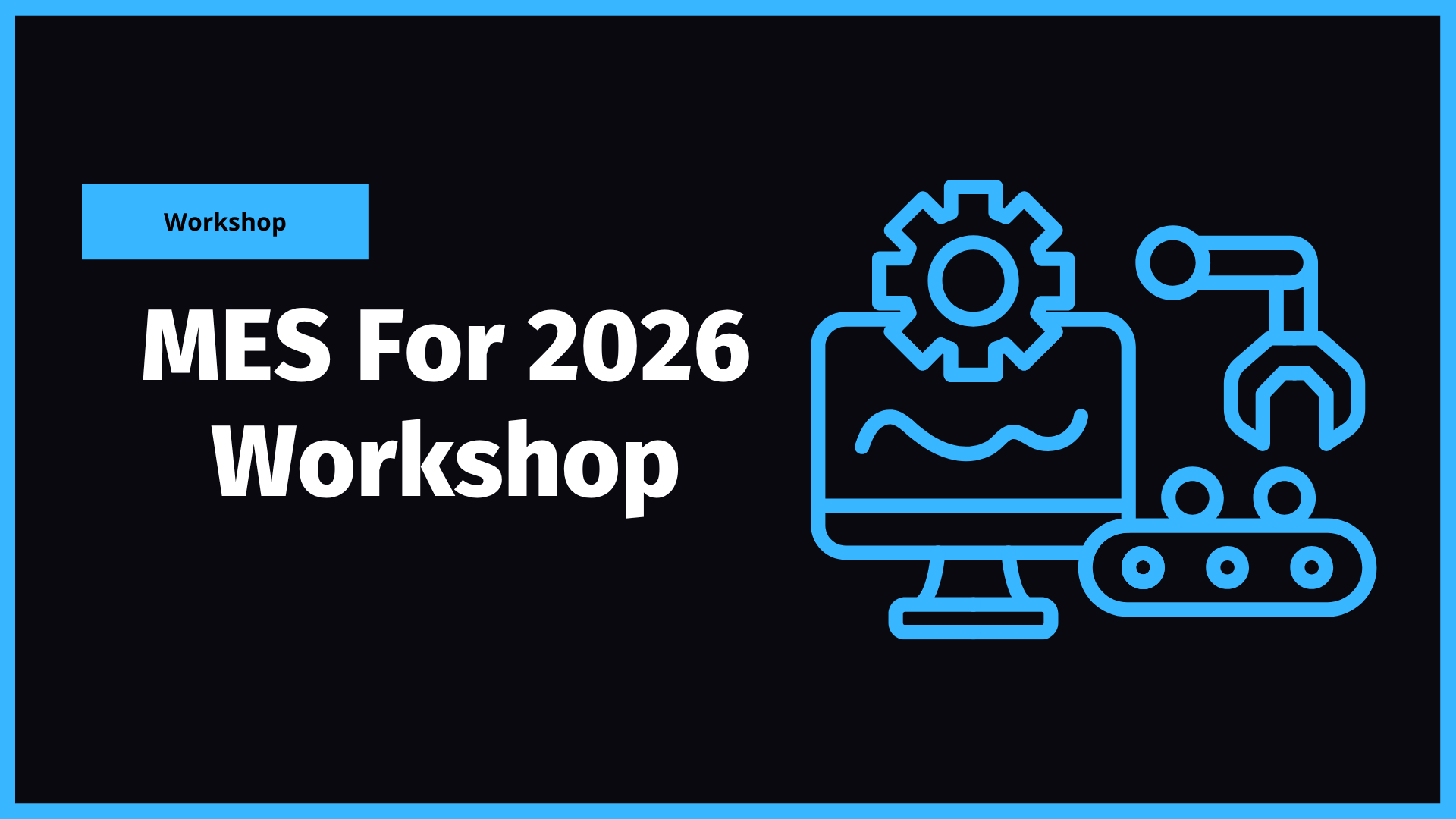
If you’re getting started with MES, the biggest mistake is thinking you need to begin with a massive, multi-year implementation.
You don’t.
The MES for 2026 Workshop is built around a much more practical starting point: solve the core manufacturing problems first, prove value on a single line, and build from there.
Across two days, Walker Reynolds will break MES down around the “Core Four”:
- OEE
- Work Order Management
- Scheduling
- Downtime Tracking
You’ll also see how AI fits on both ends of the MES lifecycle — helping accelerate design and integration up front, then becoming part of the operational system once MES is running.
The goal is not to give you another MES feature checklist.
It’s to show you where to start, what actually matters, and how to avoid turning MES into a multi-year, multi-million-dollar science project.
The MES for 2026 Workshop
October 20–21, 2026
Live online
Schneider Electric Says Its New DCS Is Open. Let’s See How Open It Really Is.
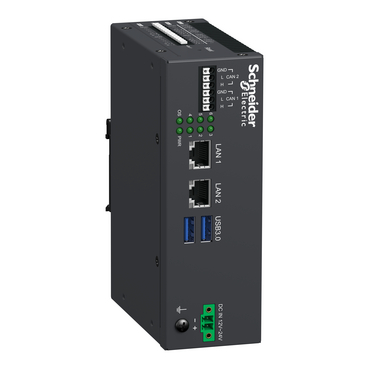
Schneider Electric just introduced EcoStruxure Foxboro Software Defined Automation, which it calls the industry’s first open, software-defined distributed control system.
That’s a notable statement coming from Schneider.
For years, Schneider — like most of the major automation vendors — has built largely around tightly integrated, proprietary ecosystems. The company has clearly been moving toward more open architectures, but calling a DCS “open” is one thing.
Proving it in the field is another.
The details:
- Foxboro SDA is built around a software-defined architecture designed to separate control software from the underlying hardware.
- Schneider says that separation will allow manufacturers to modernize parts of the system without replacing the entire installed base.
- The platform is powered by EcoStruxure Automation Expert and is being positioned around interoperability, hardware flexibility, and more portable control applications.
- Schneider also says the architecture will make it easier to integrate analytics, AI/ML, IT/OT systems, and future autonomous operations.
- The company is tying the announcement directly to the limitations of closed automation systems and the cost manufacturers incur when hardware, software, and lifecycle decisions are tightly coupled together.
Why it matters for manufacturing: Schneider is pointing at a very real problem.
Industrial automation has spent decades creating systems where hardware, software, engineering tools, licensing, support, and upgrade paths are often tightly bound to one vendor.
That has delivered reliability, but it has also created enormous switching costs and made modernization harder than it needs to be.
The irony is that Schneider has participated in that model for years.
So the interesting part of this announcement isn’t that Schneider suddenly discovered openness. It’s that one of the largest traditional automation vendors is now publicly acknowledging that closed, hardware-dependent architectures are becoming a liability.
The question is how far they’re actually willing to go.
Real-world scenario: A manufacturer has a Foxboro control system that performs perfectly well, but the computing infrastructure underneath it is aging. In a truly software-defined architecture, that company should be able to modernize the infrastructure, move applications between supported environments, and integrate third-party technologies without redesigning the entire control system or being forced deeper into one vendor’s stack.
That’s the promise.
Now we need to see what happens when customers actually try to do it.
The bottom line: Schneider moving toward software-defined, more open automation is a positive direction.
But manufacturers should be skeptical of the word “open” until they know what it means operationally.
Can you move the application? Can you use someone else’s hardware? Can third-party systems interact without proprietary gateways or licensing barriers? Can you leave the ecosystem without rebuilding everything?
Those answers will tell us whether this is actually open automation — or simply a more flexible version of vendor lock-in.
For now, Schneider deserves credit for moving in the right direction.
Let’s see how this pans out.
Read Schneider Electric’s announcement →
From the Floor: A Week in the Community
The week of August 31–September 6 in the 4.0 Solutions / Industry 4.0 Discord got into some of the harder questions manufacturers eventually have to answer: when to build versus buy MES, how much standardization is too much across multiple plants, and what happens to industrial software pricing when AI makes application development dramatically cheaper.
The MES build-vs-buy argument got real: #mes spent plenty of time debating custom MES built on platforms like Ignition and HighByte versus commercial products like Kanoa, Sepasoft, and SkyMES. The obvious tradeoff is license cost versus development cost, but the more interesting point was what happens after implementation. Buying COTS software doesn’t eliminate maintenance if you customize it so heavily that you effectively own your own version of the product anyway. Define the requirements first. Then decide which approach creates the least long-term burden.
Standardize the architecture, not necessarily every application: Over in #digital-transformation, the conversation turned to multi-site Level 3 deployments across enterprises with 20+ plants. Corporate teams naturally want one MES, one WMS, one template, everywhere. The plants usually have other ideas. Different equipment, processes, legacy systems, and operating realities make rigid global application standards difficult to enforce. The stronger argument was to standardize the data architecture, contextual model, and interfaces while allowing plants some flexibility in the applications they use.
AI could change what industrial software is actually worth: The MES conversation also spilled into what happens to traditional software OEMs when AI can generate applications, workflows, and user interfaces at a fraction of today’s development cost. The consensus wasn’t that software engineering disappears. It shifts. Generating code becomes cheaper; validating that the code is reliable, governed, maintainable, and safe around physical operations becomes more valuable. That could force industrial software vendors to prove that customers are paying for more than modules and screens.
Also worth a look: #mastermind broke down the hidden costs of building SCADA around Node-RED, InfluxDB, Grafana, and OPC UA. Cheap licensing doesn’t mean cheap ownership if the architecture creates scaling, modeling, maintenance, or cybersecurity problems later. And #unified-namespace dug into HighByte 4.5, graph-based configuration and lineage, and how MCP agents could make industrial data more contextually queryable for AI.
Not in the room yet? Come hang out in the Discord → — that's where the real work gets argued out.
Byte-Sized Brilliance
Here’s one for the controls crowd:
The first programmable logic controller was created because General Motors was tired of rewiring giant relay cabinets every time it changed a production line.
In the late 1960s, GM issued a specification for something that could replace hardwired relay logic with a programmable system. Bedford Associates answered with the Modicon 084 — widely considered the first PLC.
The funny part?
The entire point of the PLC was flexibility.
Nearly 60 years later, manufacturers are still fighting the same basic battle — trying to make production systems easier to change without ripping everything apart.
Different decade. Different technology.
Same problem.
Let us know how we're doing! https://forms.gle/zSXrKTK9BNZ3BrpXA

Responses