

View in web for best experience
It's the dog days of August — triple-digit afternoons, kids back in the classroom, and every engineering team quietly wondering if they'd still remember how to do their job without an AI assistant looking over their shoulder. Timely, because that's basically this week's theme.
Stripe just wrote a $7 billion check for an AI routing startup, which tells you a lot about where the smart money thinks AI infrastructure is headed. Siemens PLC owners got an active-threat advisory worth reading before your next shift change. And two completely unrelated corners of the dev world — one arguing AI coding tools are quietly gutting the next generation of engineers, one arguing your executable secretly wants to be a database — turn out to have more to say about your plant floor than you'd expect.
Grab your coffee. We're connecting some dots that don't obviously connect.
Here's what caught our attention:

Stripe agreed to acquire OpenRouter — the startup that sits between apps and dozens of AI models, routing each request to whichever one makes sense — for north of $7 billion.
The details:
- OpenRouter is essentially a traffic cop for AI: instead of hard-wiring your app to one model provider, you send a request through OpenRouter and it picks (or lets you pick) from 300+ models based on cost, speed, or capability.
- Stripe already processes payments for a huge chunk of the internet. Now it's buying the plumbing that decides which AI model gets paid for a given task.
- The deal turns "which LLM should handle this" from an engineering decision into a billing decision — Stripe can meter, price, and optimize AI spend the same way it already does for payments.
Why it matters for manufacturing: If your plant is running any AI — a vision model checking welds, a chatbot answering operator questions, a copilot drafting PLC logic — there's a good chance it's calling out to more than one model provider behind the scenes, whether you know it or not.
Real-world scenario: Say your quality-inspection vendor built their defect-detection pipeline on top of OpenRouter to keep costs down. That vendor's cost structure and data-handling terms just inherited a new corporate parent with very different incentives. Worth a call asking who's actually processing your images now.
The bottom line: AI infrastructure is consolidating fast, and the company that used to just move your money now decides which AI model answers your questions too.
CISA Flags Active Attacks Against Siemens S7 PLCs — Here's What to Check
CISA and partner agencies issued an advisory this week confirming active exploitation attempts against Siemens S7-series PLCs — not theoretical, happening right now.
The details:
- The S7 series is one of the most widely deployed PLC families in the world.
- The advisory came alongside a broader batch of ICS advisories released across mid-to-late August, covering multiple vendors.
- The common thread: PLCs and SCADA systems reachable from the internet — directly or through poor network segmentation — are the ones getting hit.
Why it matters for manufacturing: Most plants didn't put their PLCs on the internet on purpose. It happens gradually — a remote-access tool for a vendor, a "temporary" VPN bridge that never got removed.
Real-world scenario: A maintenance supervisor sets up remote access to an S7 PLC so a systems integrator can troubleshoot during commissioning. The integrator's contract ends. The remote access doesn't. That forgotten door is exactly the exposure this advisory describes.
The bottom line: Walk your real network diagram this week — not the commissioning-binder version — and confirm every PLC reachable from outside your walls is supposed to be.
AI Coding Assistants Might Be Quietly Wrecking Your Next Generation of Automation Engineers
A wave of recent research converges on an uncomfortable conclusion: the developers who benefit most from AI coding tools need them least — and the ones who need help most get hurt by leaning on them.
The details:
- A JetBrains-cited study found novice programmers using heavy AI assistance developed an illusion of competence — they felt like they understood the code but couldn't explain or defend it.
- The developers who did best weren't avoiding AI entirely — they'd built enough judgment to catch and reject bad suggestions, what researchers call "negative expertise."
- A University of Pennsylvania study of 1,000 students found unrestricted AI use produced 17% worse outcomes than a plain textbook — but AI set up to tutor instead of answer produced 127% better results in later practice.
Why it matters for manufacturing: Swap "coding" for "ladder logic," "SCADA scripting," or "MES configuration" and this lands squarely on your plant floor. Junior controls techs are increasingly using AI to write PLC logic or troubleshoot HMI faults — often without the experience to spot when a suggestion is subtly wrong.
Real-world scenario: A new controls engineer asks AI to write an interlock for a conveyor safety zone. It compiles, simulates fine, ships. Six months later, an edge case the AI never considered lets the interlock fail silent. A senior engineer who'd built that logic by hand might have asked "what if this sensor just stops reporting?" The junior engineer, trusting the tool, never thought to.
The bottom line: AI can be a great tutor or a dangerous crutch — the difference is whether your team uses it to build understanding or skip past the need for it.
Your PLC's Tag Database Already Wants to Be a Real Database — This Article Makes the Case Loud
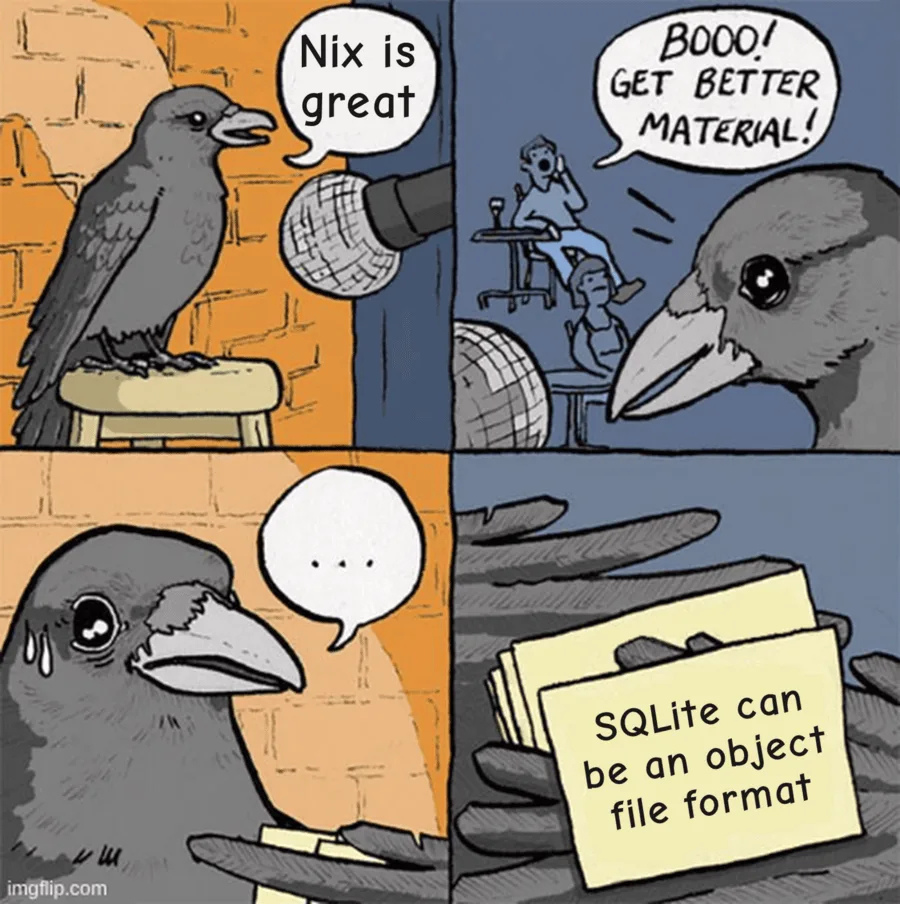
A developer recently proposed replacing the standard executable file format with a SQLite database — and buried in the argument is a lesson your OT data architecture already knows, whether you've named it or not.
The details:
- Standard executable files quietly reinvent database concepts by hand: custom indexing, custom string storage, custom lookup tables — all built from scratch instead of using an actual database.
- The author built a working prototype swapping that homemade structure for SQLite, making the executable directly queryable with plain SQL instead of specialized tools.
- The payoff at scale was real: 723 programs plus 400 shared libraries, bundled with duplicates removed, ended up smaller than storing them separately.
Why it matters for manufacturing: Most plants run a patchwork of tag databases, alarm configs, recipe files, and historian exports that all reinvent the same wheel: custom formats, no easy way to query across systems.
Real-world scenario: Your Unified Namespace strategy, if you've got one, is this same argument applied to plant data: instead of every PLC, HMI, and historian keeping its own bespoke record of what a tag means, you put everything into a structure actually designed to be queried and related.
The bottom line: Whenever a system reinvents search, indexing, or lookup by hand, ask why it isn't just a database. That instinct is worth as much on the plant floor as in a compiler.
From the Floor: This Week in the Community
From the Floor: A Week in the Community
Discord had one of those weeks where the substance showed up mid-week and the celebration showed up a day early — a genuine architecture debate, a security problem nobody's fully solved yet, and Friday Wins that couldn't wait for Friday. Here's what stood out from August 18th through the 24th.
The ISA-95 vs. UNS argument that won't resolve: Over in #unified-namespace, the week's most substantive debate broke out over whether ISA-95's hierarchical tree model still holds up in a Unified Namespace world, or whether the standard's richer non-hierarchical semantic model has just been overlooked by most implementations. R.pop shared a blog post and GitHub repo proposing an "ISA95-sequel" to modernize the model, which spiraled into real frustration with ISA as B2MML's governing body — CESMII got floated as an alternative, with Geoffnunan open to making the approach. It even produced a half-joking pitch for a "Real Unified Manufacturing Operating System" (RUMOS). Nobody landed on the question that actually matters — is UNS meant to be your plant's internal data model, or just the handoff layer between MES and ERP — but that's the kind of question worth sitting with rather than rushing.
Getting SaaS-hosted SOPs onto the shop floor without breaking OT security: #digital-transformation spent three days on a genuinely practical problem: how do you get operators access to work instructions living in Veeva Docs (SaaS) when OT network policy blocks direct access to it? The thread kicked around reverse proxy servers, zero-trust agents, and Veeva's own Station Manager, and Slamber12 is now prototyping an API-based sync that pulls from the official source into the OT network for HMI display. No clean answer emerged — this is the kind of integration problem most plants are quietly duct-taping their way through — but if you're wrestling with the same thing, that thread's worth a read.
Also worth a look: Sunday's #💬-general produced a genuinely fun tangent — a community vote on which Industry 4.0 buzzwords deserve permanent banishment, with "digital twin" and any flavor of "x.0" pulling the most nominations. And over in #ai-and-ml, someone posed a question worth borrowing an expert's brain for: can an LLM reliably control a CNC machine or generate usable NC code? Still open — if you've got a strong opinion, that thread could use it.
Not in the room yet? Come hang out in the Discord → — that's where the real work gets argued out.
Byte-Sized Brilliance
The Database Running Your Plant Might Already Be the One Your Phone Runs Too
Here's a number that doesn't get thrown around enough: SQLite — the "just use a database" punchline of this week's executable-as-database article — is estimated to have over one trillion individual database instances in active use worldwide right now. Its own creators believe it's used more than every other database engine on Earth combined.
For context, that's roughly 125 SQLite databases for every single person alive. It's quietly running inside every iPhone and Android device, every Mac and Windows machine, Firefox, Chrome, and Safari, TurboTax, Dropbox, your TV's cable box, and — this is the part that should make plant engineers sit up — a huge share of the automotive multimedia systems, HMI software, and edge devices already sitting on your factory floor.
The irony: most engineers relying on it every day have never heard of it. SQLite isn't the flashy new idea from this week's "make your executable a database" piece — it's the boring, unglamorous infrastructure that already won that argument decades ago, so thoroughly that nobody bothered to notice.
The best technology in your plant probably isn't the platform with the big logo and the annual license fee. It's the thing so reliable it became invisible.
Let us know how we're doing! https://forms.gle/zSXrKTK9BNZ3BrpXA

Responses