

Presented By

View in web for best experience
Eight hundred and eleven years ago today, a group of fed-up barons cornered King John in a meadow at Runnymede and made him sign a document saying, essentially: you're powerful, but you don't get to do whatever you want. The Magna Carta didn't make the king weaker. It made his power legible — bounded by rules everyone could point to.
We thought about that this week while reading the latest round of industrial AI announcements.
Because the pitch right now is intoxicating. AI agents that read your machine data, diagnose the underperforming shift, recommend the optimal setpoint, and — increasingly — act on it. Vendors are racing to move these agents from the pilot lab onto the production floor. And the capability is real.
But here's the question almost nobody on the sales call is asking: when an autonomous agent can write and execute code against your SCADA network, who signs its Magna Carta? What is it allowed to touch, what must it never touch, and who's watching?
That tension — powerful AI on one side, the governance to contain it lagging behind on the other — runs through everything that caught our attention this week.
Here's what's on the docket:
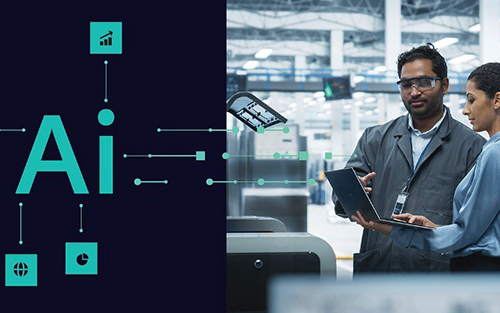
Siemens just launched software whose entire job is to turn industrial AI from pilots into something that runs your plant. The question is whether the hard part is the software... or everything around it.
The details:
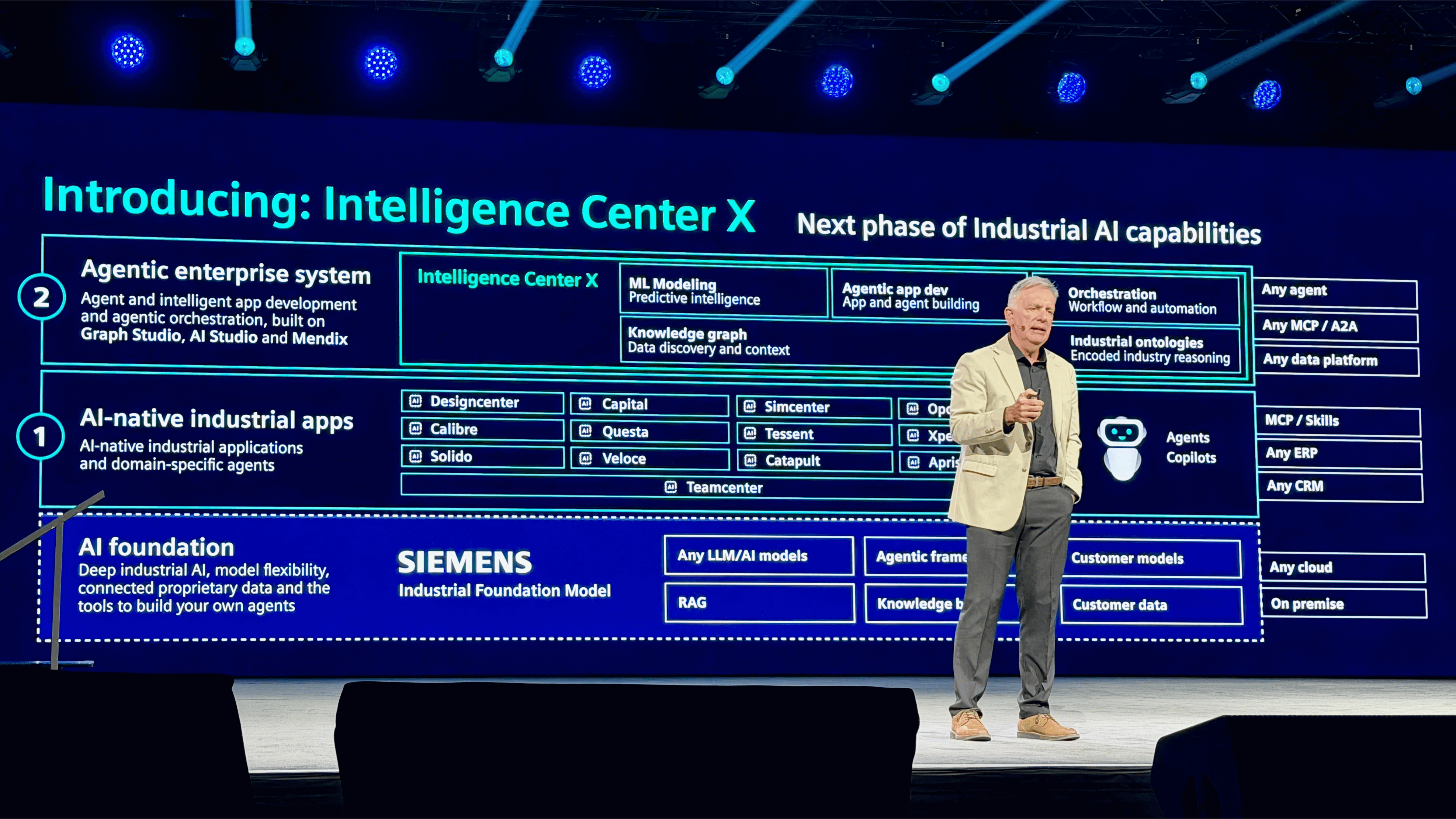
On June 2, Siemens announced Intelligence Center X, which it bills as industrial AI orchestration software. The pitch: move industrial AI from isolated experimentation into scalable, real-world impact through a "hybrid workforce" where people and AI agents work together with shared context, workflows, and lifecycle intelligence.
Translation: most companies have a graveyard of AI proof-of-concepts that never made it past one machine or one line. Intelligence Center X is meant to be the layer that connects them — so agents can actually do work across your operation instead of dying in a demo.
Siemens says it does this by connecting data, models, and workflows on a single governed foundation, letting companies deploy AI agents faster with full traceability and control. An early user, glassmaker Vivix, built a "Virtual Engineer" on the platform using Amazon Bedrock and Anthropic's Claude, and says it's now moving toward a multi-agent digital twin strategy.
Why it matters:
Two words in that announcement deserve your attention: "governed" and "traceability."
Here's the thing — the technical challenge of getting an AI agent to read a sensor and suggest a setpoint was mostly solved a while ago. The unsolved problem is everything that comes after: Which agent made which recommendation, based on what data, and who approved it before it touched a real machine? When you've got fifty agents running across three plants, "the AI suggested it" is not an answer your safety officer or your auditor will accept.
That's the actual bet here. Orchestration platforms like this one aren't selling you smarter AI — they're selling you the paper trail and the control surface around AI you were probably already experimenting with.
The skeptic's footnote: "Governed foundation" and "full traceability" are Siemens' descriptions of its own product, not independently verified outcomes. Before you believe the governance story, ask the vendor to show you the audit log, the approval gates, and the rollback — on your data, not a canned demo.
The bottom line: The race to scale industrial AI isn't really about the AI. It's about whether you can prove what it did, and stop it when it's wrong. Buy the governance, not the buzzword.
Why Your Plant Floor Can't Run AI the Way Your Office Can
There's a reason your IT team lets AI agents write and run code all day, but your controls engineer breaks into a cold sweat at the idea. It's not caution for its own sake. It's physics.
The details:
Industry analyst firm ARC Advisory Group laid out the core problem cleanly in a recent breakdown of Siemens' plant-floor AI strategy. In an office productivity setting, you can let a probabilistic AI agent write and execute code on the fly. On a manufacturing plant floor or inside a chemical process network, you cannot allow an AI model to push unvetted code scripts directly to operational databases, SCADA networks, or edge controllers.
Let's unpack two terms, because they're the whole ballgame:
- Probabilistic means the AI doesn't give you the same answer every time — it gives you a likely answer. Ask it the same question twice, you might get two different scripts. That's fine when you're drafting an email. It's a nightmare when the output controls a 400°C furnace.
- Deterministic is the opposite: same input, same output, every single time. It's what control systems have always demanded, because a valve either opens or it doesn't.
The conflict is right there. AI is probabilistic by nature. Your plant floor is deterministic by necessity.
Why it matters:
The architecture ARC describes solves this by refusing to let the AI touch the real system directly. Instead of letting agents tamper with core production application code, plant teams and agents deploy plant-specific extensions inside a managed sandbox container that acts as a deterministic governance boundary. The AI model is the brain; the sandbox is the body and the legal fence it can't step over.
Here's the mental model: you don't hand the new hire root access to the PLCs on day one. You give them a supervised environment, a defined scope, and someone who reviews their work before it goes live. The sandbox is that — for the agent.
Action items:
- When a vendor demos plant-floor AI, ask exactly where the agent's output goes — into a sandbox for review, or straight to the device?
- Confirm there's a deterministic gate (rule-based or human) between the AI's suggestion and any write to a controller or historian.
- Make sure your agents are reading contextualized data, not raw tags — an agent fed messy, unlabeled data will reason confidently from garbage.
- Treat agent permissions like any other account: least privilege, scoped access, full logging.
The bottom line: The goal isn't to keep AI off the plant floor — it's to make sure the AI proposes and a deterministic system disposes. Brain in the cloud, hands in a cage.
Only 1 in 5 Companies Can Actually Govern Their AI Agents

Your enterprise neighbors aren't doing this better than you. New numbers show the whole industry is deploying autonomous AI faster than it can control it — and the gap is the security story of the year.
The details:
A TechRadar analysis frames AI agents as a live operational security risk — not a future one. Enterprises are deploying agents faster than they're adding enforceable governance, monitoring, and identity controls. The number that should stop you cold comes from Deloitte: only 21% of organizations have mature governance for autonomous AI agents, while 73% are worried about AI security and privacy risks.
Sit with that gap. Nearly three-quarters are anxious about the risk. Barely a fifth have actually built the controls. That's not a technology problem — that's a we-shipped-it-before-we-secured-it problem.
Why it matters for manufacturing:
Articles 1 and 2 in this issue were about agents on the plant floor. This is the same disease, one floor up — in the ERP, the MES, the quality and procurement systems that increasingly hand tasks to agents.
Here's the part manufacturers underrate: an agent is an identity. It has credentials. It can log in, pull data, and trigger actions. But most companies treat agents like features, not like users — so they never get the access reviews, the activity logging, or the offboarding that a human account gets.
Translation: you've effectively hired a few hundred contractors, given them keys to your systems, and skipped the badge process. When one of them does something it shouldn't — or gets hijacked — you have no log of what it touched and no fast way to shut it off.
Real-world scenario:
An agent wired into your procurement system has standing access to approve low-value purchase orders. An attacker compromises the credentials it uses — or simply tricks it with a poisoned input. Now there's an authorized identity quietly issuing POs to a fake supplier. No malware alarm trips, because nothing about it looks like an attack. It looks like normal agent activity. Without identity-level governance and logging, you might not catch it until the invoices land.
Action items:
- Treat every agent as a named identity with an owner, scoped permissions, and an expiration date — not a faceless background process.
- Demand logging of agent actions, not just agent outputs. You need to know what it did, not just what it said.
- Apply least privilege: an agent that reads inventory doesn't also need write access to purchasing.
- Before approving any new agent, ask the one-fifth question: "Do we have mature governance for this, or are we just in the anxious 73%?"
The bottom line: Speed of deployment is not the same as readiness to deploy. If you can't see what your agents are doing and stop them on demand, you don't have AI agents — you have unsupervised access wearing a helpful face.
https://www.40solutions.com/dados
The Free Government Playbook for Everything You Just Read
Three articles into this issue, you've got the problem: AI is moving onto the floor and into your systems faster than the controls to govern it. Here's the part that should make your week easier — a government, multi-nation framework already exists for exactly this. And it's free.
The details:
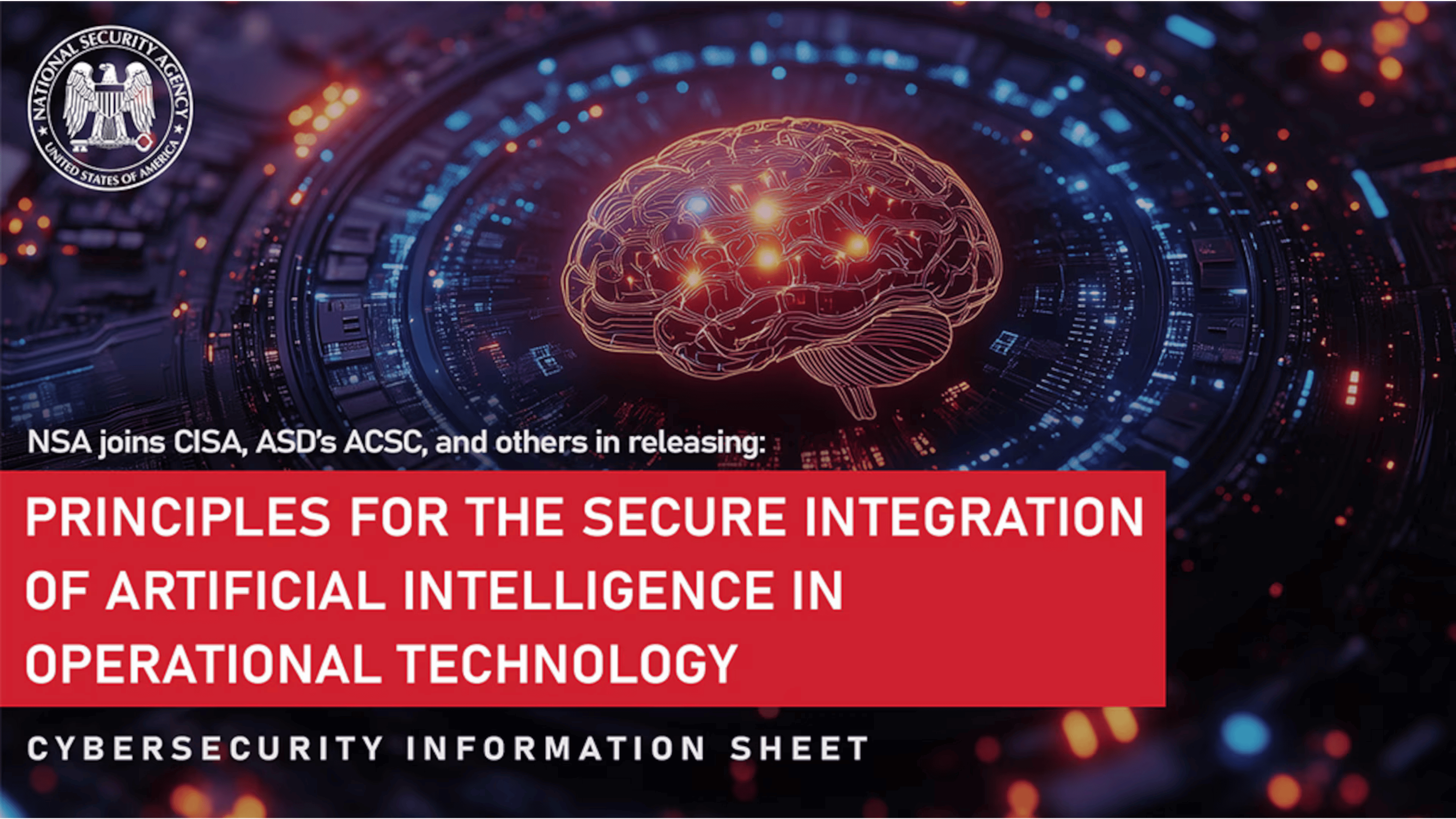
In December 2025, CISA and Australia's Cyber Security Centre, joined by the NSA, FBI, and the national cyber agencies of Canada, Germany, the Netherlands, New Zealand, and the UK, published "Principles for the Secure Integration of Artificial Intelligence in Operational Technology." CISA
Why the international all-hands? Because most existing AI security frameworks were written for IT and cloud — not for deterministic control networks governed by safety standards. This is one of the first major documents to treat AI-in-OT as its own risk category, with its own rules. Industrialdefender
It boils down to four principles:
- Understand AI. Educate your people on AI risks, impacts, and the secure development lifecycle. You can't govern what your team doesn't understand. CISA
- Assess AI use in OT. Evaluate the actual business case, manage your OT data security risks, and address both the immediate and long-term integration challenges. Not every problem needs an agent. CISA
- Establish AI governance. Put the policies, access controls, and accountability in place before the agent goes live — not after the incident.
- Embed oversight. Continuously monitor and validate, with anomaly detection and AI-drift monitoring as standing practice. Openpolicy
Why it matters:
That fourth principle is the one to underline. The guidance specifically warns about OT process models drifting over time and safety-process bypasses. CISA
Here's what "drift" means in plain terms: an AI model trained on last year's line behavior slowly becomes wrong as your equipment ages, your materials change, and your processes evolve. It doesn't fail loudly. It just gets quietly less accurate — still confident, still issuing recommendations — until one day it's optimizing for conditions that no longer exist.
The guidance also names a risk your team will feel personally: over-reliance on automation, leading to reduced human oversight, skill erosion, and lost situational awareness. Translation: if your best operators stop watching because "the AI's got it," you've traded a visible problem for an invisible one. Cyber.gov.au
Action items:
- Download the guide (it's free) and run your current AI pilots against the four principles. Where are the gaps?
- Assign an owner to AI-drift monitoring — someone whose job is to ask "is this model still right?" on a schedule, not after a bad batch.
- Use the "Assess AI use" principle as a gatekeeper: make every proposed agent justify its business case before it gets near OT data.
- Protect human oversight deliberately. Keep operators in the loop by design, not by accident.
The skeptic's footnote: A framework is a roadmap, not enforcement. The guidance tells you what to do, not how to wire it into legacy systems with vendor-locked access and intermittent connectivity. That translation work is still on you — but starting from a free, internationally vetted blueprint beats starting from a blank page.
The bottom line: Every risk in this issue already has a published countermeasure with eight governments' names on it. The gap isn't knowledge anymore. It's whether you do the work.
Learning Lens
This whole issue has been about one thing: AI that's powerful but ungoverned breaks things. So here's the natural question — if you wanted to build your own industrial AI tooling, how would you do it without becoming a cautionary tale? Walker Reynolds is teaching exactly that.
Agentic DevOps for Industry 4.0 — build your own industrial software with AI agents
Here's a number that should sound familiar after the last four articles: once an AI-built project hits critical mass, regression rates can climb past 50% — every new sprint breaking something that worked the day before. The code gets written fast, then collapses under its own weight.
Sound like the governance gap we've been hammering all issue? It's the same problem, scaled down to your own keyboard. And the fix is the same too: discipline, not more AI. Structured documentation as live context, defined agent personas, version control, and peer review — the DevOps scaffolding that's the difference between software that works once and software that holds up sprint after sprint.
What you'll actually do: Over two hands-on days, you'll stand up a complete agentic DevOps pipeline using Claude Desktop, Claude Code, and Cursor — then use it to ship a real Industry 4.0 tool to a private GitHub repo by the end of Day 2. The cohort votes on what gets built, so register early if you want a say in the product.
Who it's for: Engineers, integrators, and OT/IT pros — no software development background required. If you know Industry 4.0 (UNS, MQTT, edge/cloud, basic data flows), you're ready. Python is the default for Day 2, and you'll be guided through it.
The details:
- Dates: July 21–22, 2026, 9:00 AM – 1:00 PM CDT each day (live on Zoom, fully recorded)
- Instructor: Walker Reynolds — two-plus decades across steel, automotive, printing, and mining
- Price: $1,099 early bird (list $1,499) — or free with a Mastermind membership
- You keep: Lifetime access to the recording, plus the private GitHub repo and reference materials
If there's one takeaway from this issue, it's that AI on the plant floor lives or dies on the governance around it. This is your chance to learn that discipline by building with it — not by cleaning up after it.
Reserve your seat → · See the full workshop details →
Byte-Sized Brilliance
The first machine that could learn from data was built in 1958 — and the press immediately declared it capable of original thought.
That year, a psychologist named Frank Rosenblatt wired together a room-sized contraption at Cornell called the Mark I Perceptron. It used a 20×20 grid of light-sensitive cells — 400 "pixels" — fed into a single artificial neuron whose connection weights could be electrically re-tuned as it made mistakes. Show it enough examples and it learned to tell a triangle from a square. Reporters hailed it as "the first machine capable of original thought."
Sit with the timeline for a second. This was the same year the integrated circuit was invented and a decade before anyone walked on the moon. The vocabulary your data scientists use today — weights, learning rate, training set — all trace back to Rosenblatt's 1958 paper. Every neuron in a modern transformer model is a direct descendant of his threshold unit. The agent in this week's Siemens launch and that 400-pixel box in Buffalo are, mathematically, cousins.
Here's the part that should feel familiar after this issue: the perceptron's wild overpromising triggered a backlash so severe it helped kick off the first "AI winter" — years of stalled funding and lost faith. The technology was real. The hype outran it. The discipline to deploy it responsibly didn't exist yet. Sound like anyone's sales deck in 2026?
Sixty-eight years later, the machines are vastly smarter — but the gap between what they can do and what we claim they can do is the same gap Rosenblatt fell into. Mind that gap.
Let us know how we're doing! https://forms.gle/zSXrKTK9BNZ3BrpXA

Responses