

Presented By

View in web for best experience
It's June 1st. Summer's not technically here until the solstice on the 21st, but try telling that to the plant floor — where the AC unit on the south wall just gave out and revealed it's been "scheduled for maintenance" since approximately the Obama administration.
Funny how that works. The equipment that quietly does its job never makes the priority list — until it doesn't do its job, at which point it makes every list, usually at 2 a.m., usually right before a long weekend.
That tension — between the stuff we design and build versus the stuff we actually have to operate and maintain — is the through-line of this issue. The industry spent a decade obsessing over designing the perfect digital factory. Now the smart money is realizing the real value (and the real data) lives in the unglamorous work of keeping things running.
This week we're watching capital flow toward that exact idea: a $3.6 billion bet on maintenance software, a private equity carve-out of warehouse robotics, a rumored $100 billion fund that wants to buy manufacturing itself, and a startup teaching AI to speak fluent factory.
Here's what caught our attention:
Autodesk Drops $3.6 Billion on MaintainX — and Your Cheap, Beloved CMMS Just Became an Enterprise Asset
Autodesk has spent four decades selling the software engineers use to design things. On May 28, it agreed to spend $3.6 billion to get its hands on what happens after those things get built. If you're one of the maintenance teams that fell in love with MaintainX precisely because it wasn't enterprise bloatware, this is the week to start reading the fine print.
The details:
- Autodesk is acquiring MaintainX, a mobile-first CMMS (computerized maintenance management system — the digital replacement for the clipboard and whiteboard your team uses to track work orders, PMs, and asset history), in an all-cash deal worth roughly $3.575 billion, funded with cash on hand plus new debt.
- Closing is targeted for as early as August 3, pending regulatory review.
- MaintainX expects to clear $135 million in annual recurring revenue for 2026, growing north of 50%. That puts Autodesk's price around 26x forward revenue (our math: $3.575B ÷ $135M). Nobody pays 26x for a work-order app. They pay it for what the app collects.
- MaintainX folds into a new Autodesk Operations Solutions (AOS) group alongside Tandem (digital twin), FlexSim, and Fusion Operations.
Why it matters for manufacturing:
Let's be blunt about what Autodesk actually bought. It wasn't the software. It was the data — and you're the one generating it.
Every photo your tech snaps, every "replaced bearing on Line 3," every operator round logged on a phone is high-frequency condition data on real assets in real plants. That's the fuel behind every "AI-powered insights" slide in the deck. MaintainX built a consumer-grade app that frontline workers actually use, which means the data firehose is real and clean. Autodesk paid 26x revenue to own it.
And here's the uncomfortable history: enterprise platform acquisitions follow a depressingly reliable script. The scrappy, affordable product that won on simplicity gets absorbed, the free tier quietly shrinks, the pricing migrates toward "contact sales," the standalone roadmap gets subordinated to the parent's platform strategy, and the thing you loved becomes a module in a suite you didn't ask for. We've watched it happen across the industrial software stack for years. There's no reason to assume MaintainX is the exception.
Real-world scenario:
It's renewal time, eighteen months post-close. The free "requester" seats your operators use to submit tickets? Now metered. The $21/user plan? Folded into an "AOS Operations" bundle that only makes sense if you also license Tandem and Fusion. Your maintenance lead, who picked MaintainX because it deployed in a week without a six-figure implementation, is now sitting through a digital-twin demo to justify a renewal that tripled. The app didn't get worse — it just stopped being yours.
Maybe none of that happens. But the incentives all point one direction, and "trust us, nothing changes" is what every acquirer says on announcement day.
Read Autodesk's announcement →
The bottom line: Autodesk didn't pay $3.6 billion for a maintenance app — it paid for years of your operational data, and the affordable, frontline-friendly product that collected it is exactly the kind of thing that doesn't survive contact with an enterprise platform intact. Enjoy the free tier while it lasts, and renew early.
Honeywell's Warehouse Robotics Business Gets Carved Out to Private Equity
Honeywell is selling its warehouse automation business to American Industrial Partners (AIP), handing one of the bigger names in sortation and robotics over to a PE firm. If you run a distribution center on Intelligrated conveyors or Transnorm gear, your vendor's owner is about to change.
The details:
- AIP is acquiring Honeywell's Warehouse and Workflow Solutions (WWS) business — the unit behind the Intelligrated and Transnorm brands covering sortation systems, robotics, and warehouse execution software.
- WWS pulled in roughly $935 million in revenue in 2025 and employs 3,300+ people serving distribution, logistics, and manufacturing customers globally.
- Deal terms weren't disclosed. Expected to close in the second half of 2026.
- AIP is an industrial-focused PE firm with a portfolio spanning aerospace, mining, and energy, reporting around $29 billion in annual revenue across its holdings.
Why it matters for manufacturing:
This is a carve-out, and carve-outs play out differently than the Autodesk-style strategic buy in our first story. A strategic acquirer wants your data and your roadmap. A PE firm wants your cash flow and a cleaner balance sheet — and a clear path to selling the business again in five to seven years.
That's not automatically bad. Carve-outs can help a neglected division: when a unit is a non-core afterthought inside a conglomerate like Honeywell, getting spun out to owners who actually care about warehouse automation can mean more focused investment and faster decisions. The risk is the other PE playbook — cost-cutting, thinner support, R&D trimmed to juice margins before the next sale.
For a plant or DC, the practical question isn't "is PE good or bad." It's: which playbook is AIP running, and how exposed am I if it's the cost-cutting one?
Real-world scenario:
You've got Intelligrated sortation running your shipping operation, and a service contract that's been reliable for years. Post-close, you start noticing the signs that tell you which playbook you're in: Are spare-part lead times stretching? Did your account rep just get "reorganized"? Is the next software release slipping with no clear roadmap? Or — the good version — are they suddenly investing in the robotics line and returning calls faster because warehouse automation is finally someone's main business instead of line item #47?
The equipment on your floor doesn't change the day the deal closes. The company standing behind it does, and you find out which kind over the following 18 months.
The bottom line: When a conglomerate sells a division to private equity, the hardware on your floor stays put but the priorities behind it flip overnight — and whether that's an upgrade or a slow decline depends entirely on which PE playbook AIP runs. Watch the spare-parts lead times; they'll tell you before the press release does.
Bezos Wants to Raise $100 Billion to Buy Factories and Feed Them AI
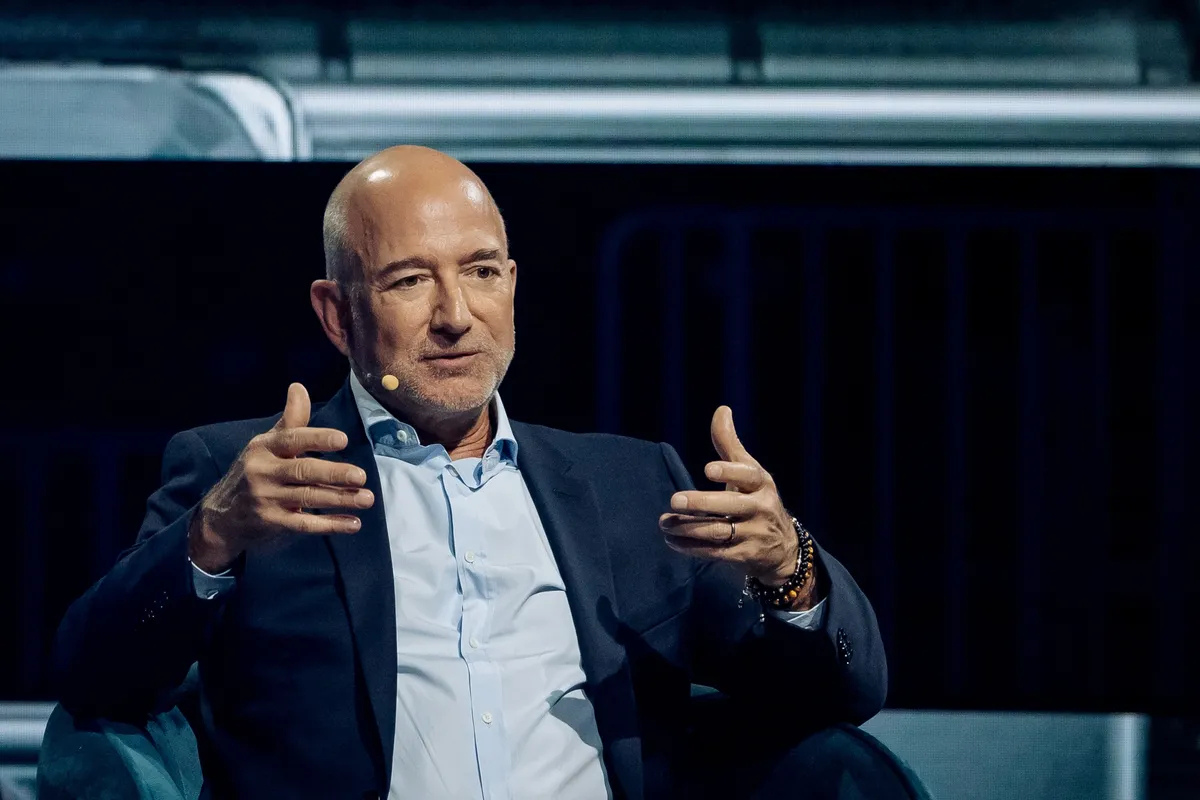
Worth watching, not yet confirmed: The Wall Street Journal reported back in March that Jeff Bezos is in early talks to raise a $100 billion fund whose entire thesis is buying manufacturers outright and rebuilding them around AI. Talks are still preliminary and nothing's closed — but the size of the idea is the story.
The details (per WSJ reporting):
- Bezos has reportedly been meeting major asset managers and sovereign wealth funds — including trips to the Middle East and Singapore — to raise as much as $100 billion.
- Investor documents describe it as a "manufacturing transformation vehicle" that would acquire industrial companies and deploy AI to automate and optimize their operations.
- Target sectors named: chipmaking, defense, and aerospace.
- The fund would tap technology from Project Prometheus, the physical-AI startup Bezos co-leads (it raised $6.2 billion and is building models that simulate how things behave in the real world).
- Reality check: the WSJ explicitly called these talks preliminary. No close, no confirmed commitments. Treat the $100B as an ambition, not a done deal.
To put the number in perspective: $100 billion would match SoftBank's original Vision Fund and put Bezos in the same weight class as the largest sovereign wealth funds on earth. This isn't venture capital writing $20 million checks into startups — it's a vehicle big enough to buy established manufacturers outright and restructure them from the inside.
Why it matters for manufacturing:
Here's the model, and why you should care even if you'll never take a meeting with this fund. Most venture money chases software startups. Bezos's reported thesis is the opposite: buy the unsexy, asset-heavy, real-world companies — the ones with real factories, real equipment, real customers — and treat AI as the lever to make them more profitable.
Translation: the buyout playbook is coming for the physical economy, and "we'll fix it with AI" is the new pitch deck slogan. That deserves a skeptical read. We've all seen "AI transformation" used as cover for plain old restructuring — buy a company, automate jobs, cut headcount, flip it. The honest version (AI that genuinely improves throughput and uptime) and the cynical version (AI as a euphemism for layoffs and margin extraction) look identical on a slide. The difference only shows up on the floor.
And critics noticed fast — Senator Bernie Sanders framed the reported fund as oligarchs automating away workers. Whatever your politics, that reaction is a preview of the scrutiny any "AI buys the factory" story is going to draw.
Real-world scenario:
Imagine a mid-sized aerospace-parts supplier — solid order book, aging equipment, thin margins, owners near retirement. A fund like this buys it, drops in physical-AI models to optimize scheduling and predictive maintenance, and three years later it's either (a) genuinely more competitive and still employing its people, or (b) stripped down, automated, and prepped for resale. The capital and the AI are the same in both cases. The intent — and the outcome for the people on that floor — is what differs.
If you work for a company that's an attractive target (good market position, "lagging" tech adoption), this is the kind of macro trend worth understanding before it shows up in a board meeting.
The bottom line: A $100 billion fund built to buy factories and run them on AI is still a rumor — but it's a rumor that tells you exactly where the smart money thinks the next decade of industrial value lives. Just remember that "AI transformation" and "buy, automate, flip" can be the same sentence wearing different clothes.
https://www.40solutions.com/dados
A "Manufacturing Language Model"? Launchpad Bets Domain-Specific Beats General-Purpose
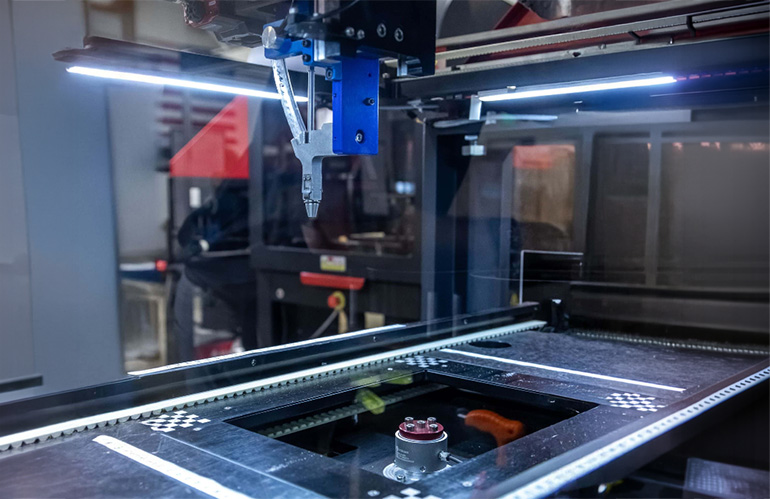
Everyone's bolting general-purpose LLMs onto the plant floor. A small Edinburgh-to-El Segundo robotics company is making the opposite bet: an AI trained only on how factories actually work — and it's pointing straight at the engineers who design automation cells.
The details:
- Launchpad Build AI (formerly just "Launchpad," founded 2020) announced what it calls the world's first Manufacturing Language Model (MLM) — an AI purpose-built for industrial automation design, not general chat.
- The pitch: feed it a photo, video, or CAD file of a part or workspace, and it helps generate an automation/robotics solution — what the industry calls "intent-based engineering" (you describe the goal; the system figures out the implementation, instead of an engineer programming every motion by hand).
- It's trained on data from live production environments, and explicitly aimed at high-mix, low-volume manufacturers — the smaller shops running lots of different parts in small batches, who've historically been priced out of automation because the engineering cost couldn't be spread across a long production run.
- Backed by an $11M Series A (2H 2025) whose investors include Lockheed Martin Ventures and Ericsson Ventures. New CTO Ken Moynihan comes from TOMRA (AI sorting); MLM head Yannis Georgas comes from Capgemini Invent.
Why it matters for manufacturing:
Here's the real bottleneck in automation today, and it's not the robots. It's the engineering time. Designing, programming, validating, and re-tooling an automation cell is slow and expensive — which is exactly why high-mix, low-volume shops (the majority of manufacturers) often can't justify it. By the time you've engineered the cell, the production run is half over.
Launchpad's bet is that a narrow model trained on real manufacturing data will outperform a generalist that "read the whole internet." As CEO Jon Quick framed it: why scrape the web for a million screwdrivers and grippers when you can train on what actually works in production? It's a credible thesis — domain-specific models routinely beat general ones inside their lane.
But notice the contrast with our lead story this week. In the Dragos report, a general model (Claude) recognized OT infrastructure it had never been trained on. Launchpad is arguing the opposite — that in the physical world, specialized beats general. Both can be true: general models are scarily good at reasoning across unfamiliar domains; specialized models are better at reliably executing within one. The factory floor cares a lot about that second word — reliably.
The bottom line: The most interesting AI bet in manufacturing right now isn't a bigger model — it's a narrower one that claims to turn a photo into a working automation cell. If it delivers even half of that for high-mix, low-volume shops, it cracks open automation for the manufacturers who've been locked out of it. Just make them prove the "deployable" part on your floor, not theirs.
Byte-Sized Brilliance
The assembly line was invented backwards — in a slaughterhouse.
The single most important idea in manufacturing history didn't start with cars. It started with carcasses.
In the 1870s, the meatpacking plants of Cincinnati and Chicago were already running overhead trolleys that slid animal carcasses past rows of stationary butchers, each making one specialized cut. Workers stayed put; the work came to them. Henry Ford didn't dream up the moving line — he toured a meatpacking plant, watched this in action, and ran the idea in reverse. He even called his Highland Park line "the disassembly line run in reverse."
The payoff was staggering. Ford's moving line cut the time to build a magneto flywheel from 20 minutes to 5, and within a decade "progressive assembly" became the default way to build everything from radios to bicycles to pencils. An entire century of mass production traces back to engineers figuring out how to take an animal apart efficiently.
There's a quiet lesson in that for anyone deploying technology today. The breakthrough wasn't a new machine — it was someone looking at a completely unrelated process and recognizing the transferable pattern. The next leap on your floor might not come from a robotics catalog. It might come from watching how some other industry already solved your problem, then running it in reverse.
Let us know how we're doing! https://forms.gle/zSXrKTK9BNZ3BrpXA

Responses