

Presented By
View in web for best experience
Happy Fourth of July, Industry 4.0!
This one's a big birthday. July 4, 2026 marks 250 years since 56 delegates in Philadelphia signed their names to a document that made a genuinely radical claim: that a country could be built on an idea instead of a king. "We hold these truths to be self-evident, that all men are created equal" — words written by a group of people who, in plenty of cases, didn't yet live up to them.
It's worth sitting with how radical that sentence actually was. "Life, liberty, and the pursuit of happiness" wasn't just nice phrasing — it said ordinary people had a claim to more than bare survival. It said those rights didn't come from a king or a parliament's permission; they were, in the document's own words, "endowed by their Creator," meaning no government handed them out and none could legally take them back. And it said the only legitimate government was one that borrowed its authority from the people being governed, not the other way around.
Put those pieces together — rights you're born with, and a government that answers to you instead of the reverse — and you get something close to rugged individualism: the idea that if you're free to build your own life, you're also on the hook for building it. That combination is what turned a shaky coastal experiment into what people started calling a "city on a hill" — a phrase that actually predates the Declaration by about a century and a half, but stuck around because the rest of the world kept watching to see if self-government could actually work.
That gap between the ideal and the reality isn't a footnote to the American story. It basically is the American story. Eleven years after the Declaration, the Constitution's opening line didn't promise a perfect union — it called for a "more perfect" one, because the people writing it knew the job wasn't finished. It took a civil war to end slavery. It took until 1920 to guarantee women the vote, and until the 1960s for the promise of equal rights to come with federal teeth behind it. Two hundred fifty years in, the work still isn't "done" — it's just further along than it was, and we're closer than ever to actualizing it.
You don't have to be American for that to mean something. Every institution — a country, a company, a plant floor — writes down what it wants to be before it becomes it. The distance between your mission statement and Tuesday's actual output isn't a scandal. It's the job. The only real question is whether you're closing that gap year over year, the same way this country has, however unevenly, for two and a half centuries.
Alright — back to the shop floor. This week: an industrial software shakeup years in the making, a patch-management crunch that AI is making both better and worse, a reality check on humanoid robots, and a look at where the AI-in-manufacturing money is actually flowing. We're also launching a new recurring segment — From the Floor — a look at what your peers have been talking about in our Discord community this week.
Here's what caught our attention:
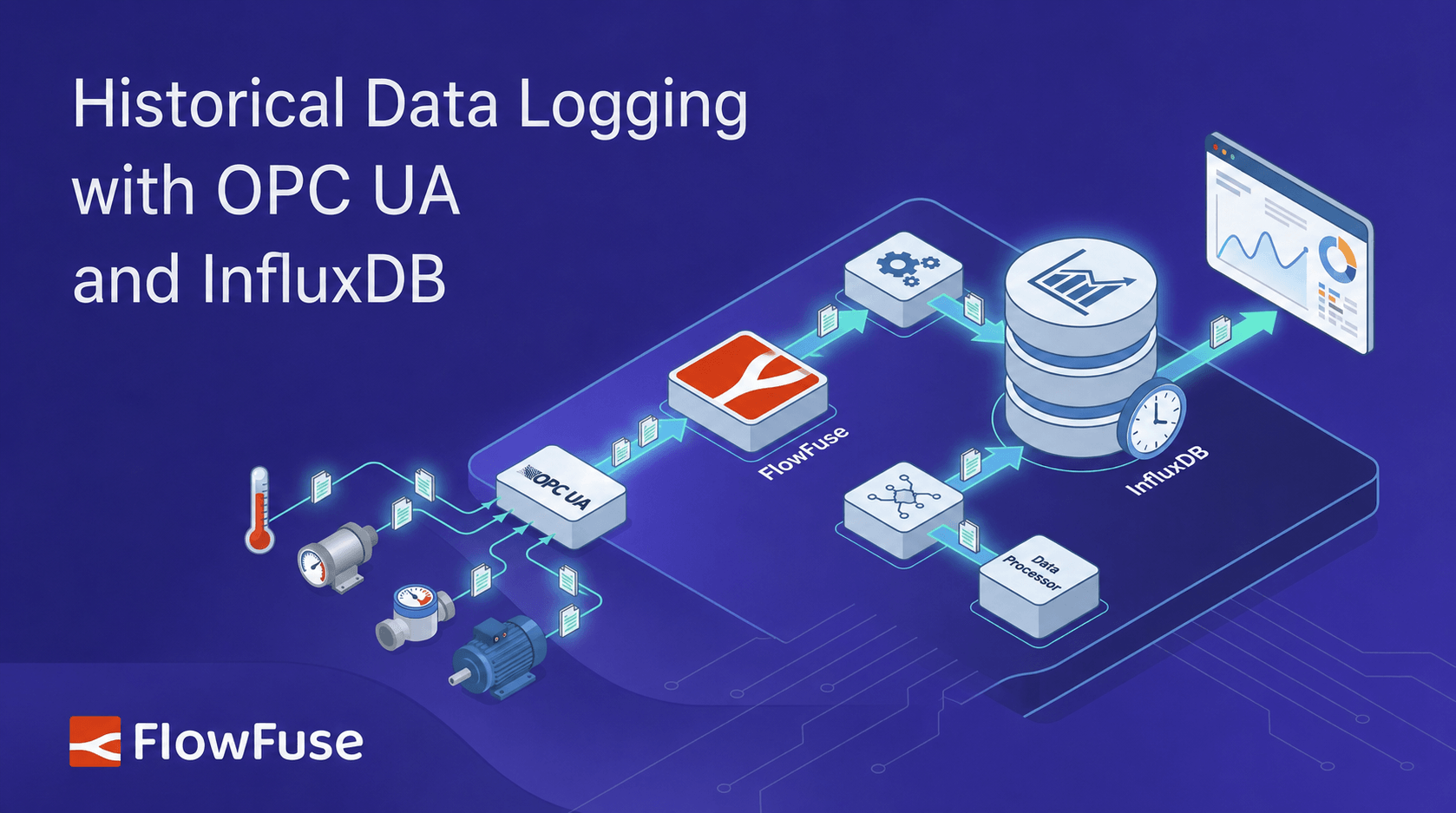
If you can see a live temperature reading on a dashboard right now but couldn't tell me what it was doing three hours ago, you don't have a data problem — you have a memory problem. FlowFuse published a hands-on guide this week showing exactly how to fix that using tools you may already have sitting around.
The details:
- The tutorial (published June 24, 2026, by FlowFuse technical writer Sumit Shinde) walks through connecting OPC UA (the standard, secure way industrial equipment shares data — think of it as a universal translator between PLCs, sensors, and software) to InfluxDB (a database purpose-built for time-stamped data, like temperature-over-time or vibration-over-time) using Node-RED (a visual, drag-and-drop tool for wiring data sources together — you connect boxes instead of writing a program line by line).
- The pipeline has four basic stops: pull a reading from your OPC UA server on a schedule → reshape that reading into a clean format → stamp it with the exact time it was actually measured (not when it happened to arrive) → write it into InfluxDB.
- For the OPC UA connection specifically, the guide uses FlowFuse's "Edge Certified" node package — nodes that FlowFuse has tested and maintains, as opposed to community-built nodes that work but come with no such guarantee.
- You don't need a live PLC to follow along. The free Prosys OPC UA Simulation Server lets you practice the whole thing before you touch real equipment.
Why each step matters (for those newer to this):
- Reading "on a schedule" matters because OPC UA doesn't just dump data at you — you have to ask for it at whatever interval makes sense (every 5 seconds, every minute, etc.). Too frequent, and you flood your database with noise. Too infrequent, and you miss the failure that happened between readings.
- Reshaping the reading matters because raw OPC UA data isn't automatically "database-ready" — you're organizing it into the fields (the actual values, like temperature) and tags (the labels, like which machine or which sensor) that InfluxDB expects.
- Using the server's own timestamp, instead of whatever time your Node-RED flow happens to run, matters more than it sounds. If your network hiccups and a reading arrives 10 seconds late, you want your history to reflect when the machine actually measured it — not when your software got around to processing it. Get this wrong and your trend lines lie to you.
Common pitfalls to avoid:
- Skipping the timestamp step and just using "now" — this quietly corrupts your trend data over time.
- Reading too many tags too frequently "just in case" — start with the handful of tags you'd actually act on, not everything the PLC exposes.
- Using community OPC UA nodes for a production system without testing them the way you'd test any other new tool on your network.
The bottom line: You already have the equipment generating this data — you're just letting it evaporate. This is a weekend-sized project, not a capital request.
Your Patch Backlog Just Got Heavier — And AI Is Why, On Both Sides

If your IT team feels like they're drowning in security updates lately, they're not imagining it. Microsoft just had its busiest patching month of the year, and the pace isn't letting up.
The details:
- In June 2026, Microsoft released 208 CVEs (Common Vulnerabilities and Exposures — the standard ID system used to track individual security flaws) in a single month, its highest volume this year.
- The last three months combined added up to 542 CVEs — nearly double the 286 released in the same three-month window in 2025.
- For context on how fast this has grown: ten years ago, Microsoft released just over 500 CVEs for the entire year. Now that's roughly a quarter's worth.
- A big driver behind the spike: AI tools — used by both defenders and researchers — are getting faster at finding flaws buried in code, including through programs like Anthropic's Project Glasswing, which gives select trusted organizations controlled access to frontier models for security research.
Why it matters for manufacturing:
Here's the uncomfortable math. IT teams patching laptops and servers can usually push updates out fast, sometimes automatically overnight. OT (operational technology) teams can't do that. A PLC or HMI running a live production line typically only gets patched during a scheduled maintenance window — sometimes just a few times a year — because taking a system down mid-shift to install a Windows update isn't an option when it's controlling a press or a conveyor.
So when the rate of new vulnerabilities being discovered doubles, the gap between "vulnerability disclosed" and "vulnerability patched" doesn't shrink for OT — it grows. You're not just facing more patches. You're facing a widening window where known, disclosed flaws sit unpatched on systems that are hard to take offline in the first place.
Real-world scenario:
Picture this: your plant runs Windows Server underneath a SCADA (supervisory control and data acquisition — the software layer that lets operators monitor and control equipment) system that hasn't been touched since the last planned shutdown, three months ago. In that time, dozens of new CVEs affecting that same OS version have gone public. Your next maintenance window isn't for another six weeks. That's not a hypothetical — that's the normal patch cadence at a lot of plants right now, and the vulnerability pile-up isn't waiting for your schedule.
Action items:
- Ask your OT team (or yourself, if that's you) how many known, unpatched CVEs currently apply to your control systems, and how old the oldest one is. If nobody can answer that quickly, that's the actual problem.
- Prioritize by exploitability, not by volume. You will never patch everything before the next maintenance window — focus on the flaws that are already being actively exploited in the wild, not just the ones with the scariest CVSS score.
- If your plant floor systems are internet-facing or remotely accessible in any way, treat that connection itself as a bigger risk than any individual missing patch, and get it addressed outside the normal patch cycle.
The bottom line: AI is helping vendors and researchers find vulnerabilities faster than ever — but manufacturing's patch cycle hasn't gotten any faster to match. That gap is now the thing to manage, not the patch count itself.
Automate 2026 Produced a Flood of Press Releases — Here Are 3 That Actually Matter
Every big trade show produces the same pattern: a hundred announcements, most of them forgettable by the time you're back at your desk. Automate 2026 in Chicago was no different — except these three cleared the bar.
1. A robot that doesn't need a cage
Mantis Robotics unveiled the MR-X, a dual-arm robot that operates at full industrial speed — up to 10.6 m/s, lifting up to 70 lbs — without a safety fence or cage around it.
- The trick is something called SafetyCore: a reflex system built into the robot itself that gives it continuous, real-time awareness of everything around it, instead of relying on external sensors or a marked "keep-out zone" on the floor.
- When a person steps into its path, it reacts on its own, without stopping the whole operation — the way you'd flinch away from something rather than freezing entirely.
- Its predecessor, the MR-1, is already certified to ISO 10218 and ISO 13849 (the two main international safety standards for industrial robots working near people) and is backed by deployments at companies including Amazon.
Why it matters: Fences and light curtains have always been the tradeoff for putting a fast robot next to a human — you get speed, but you lose floor space and flexibility. A robot that's certified-safe without that infrastructure changes the math on where automation makes sense, especially in tight or shared spaces.
2. Belden bet on the "edge-to-core" problem
Belden launched four products built to solve a less glamorous but very real problem: getting data reliably from a sensor on the plant floor all the way to your enterprise systems, without a weak link in between.
- LioN-X IO-Link Masters — rugged connectivity for machine-mounted sensors, cutting down on cabinet wiring.
- Hirschmann DAP849 wireless access points — Wi-Fi 6, rated IP67 (meaning fully dust-tight and safe from temporary submersion — the standard for harsh factory environments).
- GREYHOUND GRS2000 switches — high-density switching with backbone speeds up to 10 GE (10 gigabit Ethernet — the kind of bandwidth you need when you're aggregating video feeds and high-frequency sensor data, not just a handful of temperature readings).
- Virtual Firewall TBF-800V — purpose-built to block OT-targeted cyberattacks without interrupting uptime.
Why it matters: None of these are flashy. But "the network held up" is invisible right up until it doesn't, and these four products target exactly the kind of infrastructure gap that turns into a 3 a.m. phone call.
3. Dexterity and Kawasaki double down on warehouse robotics
Dexterity expanded its partnership with Kawasaki Robotics, pairing Kawasaki's new RL030N arm with Dexterity's Mech platform to push more autonomous decision-making into warehouse logistics work — picking, packing, and sorting without a human calling every move.
Why it matters: This is less "new technology" and more "two serious players betting bigger on the same bet" — a signal of where investment is concentrating, not a novelty.
Real-world scenario:
Picture a packaging line that's been stuck choosing between a fenced robot cell (fast, but eats 200 square feet you don't have) or a slower cobot (fits the space, can't hit your cycle time). A cage-free, certified-safe dual-arm robot doesn't force that tradeoff. Meanwhile, the network carrying that robot's data back to your MES needs to actually survive the wash-down area it's sitting next to — which is exactly what the Belden announcement is about.
The bottom line: Skip the humanoid hype reel — the robot that doesn't need a cage and the network gear built to survive a factory floor are the two things from this show worth remembering in six months.
Mantis Robotics MR-X →
Belden's edge-to-core lineup →
Dexterity + Kawasaki →
A Word from This Week's Sponsor
Your AI Writes Code Fast. Then It Breaks. Here's the Discipline That Fixes It.
This whole issue has been about the same lesson: AI without the right humans in the loop falls apart. Nowhere is that truer than in software. Teams adopting agentic AI keep hitting the same wall — once a project gets big enough, regression rates climb past 50%. Every new sprint breaks something that worked yesterday. The code gets written fast, then collapses under its own weight.
The problem isn't the AI. It's the missing DevOps discipline — structured documentation as live context, agent personas, version control, peer review — that keeps AI-built software working sprint after sprint instead of just once.
That's the entire premise of Agentic DevOps for Industry 4.0, the next live workshop from Walker Reynolds and IIoT University.
What you'll actually do: Over two hands-on days, you'll stand up a complete agentic pipeline — Claude Desktop Project Agent, Claude Code Developer, and Cursor Peer Review Agent — and use it to ship a real, working Industry 4.0 tool to a private GitHub repo by the end of Day 2. Not a toy demo. A tool your work actually needs — and the cohort votes on what gets built, so registering early means you get a say.
Who it's for: Engineers, system integrators, and OT/IT pros who know Industry 4.0 (UNS, MQTT, edge/cloud) but don't have a software-development background. If you can describe the tool you wish you had, you're ready to build it.
The details:
- 📅 July 21–22, 2026 · 9:00 AM–1:00 PM CDT each day · Live on Zoom
- 💰 Early-bird: $1,099 (list price $1,499) — or free for Mastermind members — early bird ends today!
- 🎥 Every session recorded — registrants get lifetime access plus the GitHub repo and reference materials
- ✅ Refundable up to 24 hours after purchase, before the workshop begins
Lock in the early-bird rate and reserve your seat →
Everyone's About to Cite This AI Market-Growth Number — Here's What's Actually Behind It![]()
If someone in a budget meeting this quarter says "the AI-in-manufacturing market is exploding, we need to move," there's a good chance they're pointing at this report. Worth knowing what it actually says before it gets waved around as justification for a purchase.
The details:
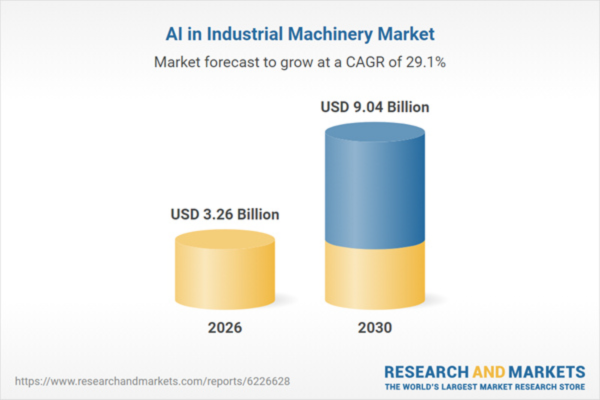
- ResearchAndMarkets.com's "AI in Industrial Machinery Market Report 2026" pegs the market at $2.52 billion in 2025, growing to $3.26 billion in 2026 — a 29.2% CAGR (compound annual growth rate, meaning that's the annual growth pace, not a one-time jump).
- The report projects the market will keep compounding at roughly that same rate, reaching $9.04 billion by 2030.
- Cited growth drivers: advancing factory automation, rising cost of unplanned downtime, more sensor-equipped machinery generating usable data, and general pressure to run leaner.
- One less-obvious detail buried in the report: tariffs are already reshaping how this money gets spent. Higher costs on imported sensors and AI-enabled hardware are reportedly pushing manufacturers toward domestic production and software-based optimization instead of buying more foreign hardware.
Why it matters:
Here's the thing about market-sizing reports like this one: the exact dollar figure is the least useful part of it. These numbers come from analyst models, vendor surveys, and a fair amount of extrapolation — treat "$3.26 billion" as directionally useful, not as a precise fact you'd stake a decision on. Anyone citing this report as proof that you specifically need to buy something is skipping a step.
What is useful: the trend underneath the number. This isn't a market that spiked once and might cool off — it's compounding, year over year, at a consistent rate. And the tariff detail matters more than the topline growth number does, because it tells you where the money is shifting: away from imported AI hardware, toward software-driven optimization of equipment you may already own.
Real-world scenario:
Your CFO drops this stat in a planning meeting and asks why your capital request doesn't include an AI line item. The weak response is nodding along and asking for budget because "the market is growing." The strong response: pull your own downtime numbers, your own sensor data (or lack of it), and make the case using your numbers — while pointing out that the growth this report describes is increasingly happening on the software side, which is usually a smaller ask than new hardware.
Action items:
- If a vendor cites this report to justify their pricing or urgency, ask for ROI data specific to your use case — not the industry-wide growth rate.
- Before budgeting for new AI-enabled sensors or hardware, check whether tariff exposure has changed your total cost of ownership, and whether a software layer on your existing sensors gets you 80% of the value for a fraction of the cost.
- Borrow the report's own vocabulary — downtime reduction, yield maximization, sensor proliferation — as the categories for your internal business case, even if you're skeptical of the specific dollar projection.
The bottom line: The $3.26 billion figure will show up in a lot of slide decks this quarter. The number worth remembering isn't that one — it's that AI spending on the shop floor is compounding annually, and tariffs are quietly pushing more of it toward software instead of imported hardware.
Read the full report summary →
From the Floor: This Week in the Community
New segment alert: each week, we're pulling the best conversations from our Discord community and bringing the highlights here. First one's below:
The "Industry 5.0" pile-on
The week's biggest debate wasn't about a product — it was about a label. It kicked off with members asking, reasonably, why the industry keeps inventing new numbers when most manufacturers haven't even finished implementing Industry 4.0. A shared post titled "Industry 5.0 Doesn't Exist — Stop Talking About It" landed hard.
But the conversation didn't stop at cynicism. By the end of the week, one member reframed the whole debate: the labels don't matter — the speed of change does. Their real question was, "how fast can we absorb it?" That's arguably the more useful question for anyone running a plant right now, and we're inclined to agree: whatever you call this moment, the bottleneck was never the technology.
Schneider Electric buys Cognite — $3.1B, all cash
Big consolidation news broke mid-week: Schneider Electric is acquiring Cognite, folding its industrial AI/data platform into AVEVA. Sound familiar? It's the same story as this issue's Velotic piece — another industrial software player getting absorbed into a bigger portfolio.
The community's reaction was sharp and specific, not just "M&A is happening again." The real questions raised: will the combined platform keep open APIs and portable data models, or does switching get harder? Can you swap one layer without redesigning your whole architecture? Those are the right questions to ask about any acquisition in this space — Velotic included.
AI in CDMOs: the trust problem is architectural, not just legal
A sharp technical thread tackled a real problem: how do you get contract manufacturers to trust AI with client processes when their recipes and IP are on the line? One question cut to the core of it: is client data actually separated by technical controls (dedicated environments, access controls), or just by a contract promising it will be? That's a good gut-check for anyone selling — or buying — a "secure multi-tenant" AI platform.
The group's practical next steps, worth borrowing regardless of your industry: start with a small-scope proof of concept, write up the results, loop in legal early, and don't reach for AI when simpler statistical methods would solve the problem with less client anxiety.
Quick hits from the rest of the week:
- Edge vs. cloud, settled pragmatically: reporting and analytics belong in the cloud; anything real-time, control-related, or safety-critical stays on the edge. Not a competition — a segmentation problem.
- A member wrestling with the jump from a small company to a large one — real impact traded for BI dashboards and approval chains — got some solid peer support. If that's you right now, you're not alone in it.
- A quick technical assist: B&R/Siemens S7-1200 PROFINET users hitting a "64-byte limit" — community consensus is that's per virtual I/O card, and adding more virtual cards should get you around it.
Welcome to the newest members: Saravanan, Federico, Faheem, and several others who joined this week. Glad to have you.
Not in the Discord yet? This is just a sample of what happens there daily — debates, technical help, career advice, and a straight line to peers who've solved the same problems you're facing. Come join the conversation: JOIN THE DISCORD
Byte-Sized Brilliance
One Jet Engine Sensor Generates More Data Than You Do
A single sensor bolted onto a GE gas turbine engine can produce roughly 500GB of data — every day. Not the whole engine. Not the whole aircraft. One sensor.
For context: that's more data than most people use on their phones in an entire year, generated by one sensor, in the time it takes you to eat lunch and drive home. Modern injection molding machines on a plastics line aren't far behind — some throw off multiple terabytes of sensor data daily, completely on their own.
Here's the part that should sting a little: most of that data never gets used. It gets sampled down, averaged out, or quietly discarded, because most plants never built anywhere for it to live, let alone a reason to keep it. (If Article 1's OPC UA-to-InfluxDB pipeline felt like more setup than your operation needs, this is exactly why it isn't.)
The bottom line: Manufacturing doesn't have a data shortage. It has a "generate it, then throw it away" problem. The sensors were never the bottleneck — the question is whether anyone built a place for that data to actually live.
Let us know how we're doing! https://forms.gle/zSXrKTK9BNZ3BrpXA

Responses