

Presented by

Happy January 19th, Industry 4.0!
The holidays are officially behind us, the inbox is full again, and 2026 is wasting no time getting serious. While some teams are still finalizing roadmaps and budgets, the technology stack powering modern manufacturing is already shifting gears. AI compute is scaling to power-plant levels, operator execution is finally being treated like measurable data, and the hardware behind “intelligent software” is becoming a strategic asset—not an afterthought.
This week’s stories all point to the same theme: digital transformation is moving out of theory and into infrastructure. Whether it’s how we train people, where we run AI, or how much power it takes to do both, the decisions being made right now will shape how factories operate for the rest of the decade.
Let’s kick off the year by looking at where Industry 4.0 is getting very real, very fast.
Here's what caught our attention:
XAI’s Colossus 2 Cluster Goes Live — 1 GW of AI Training Power Online
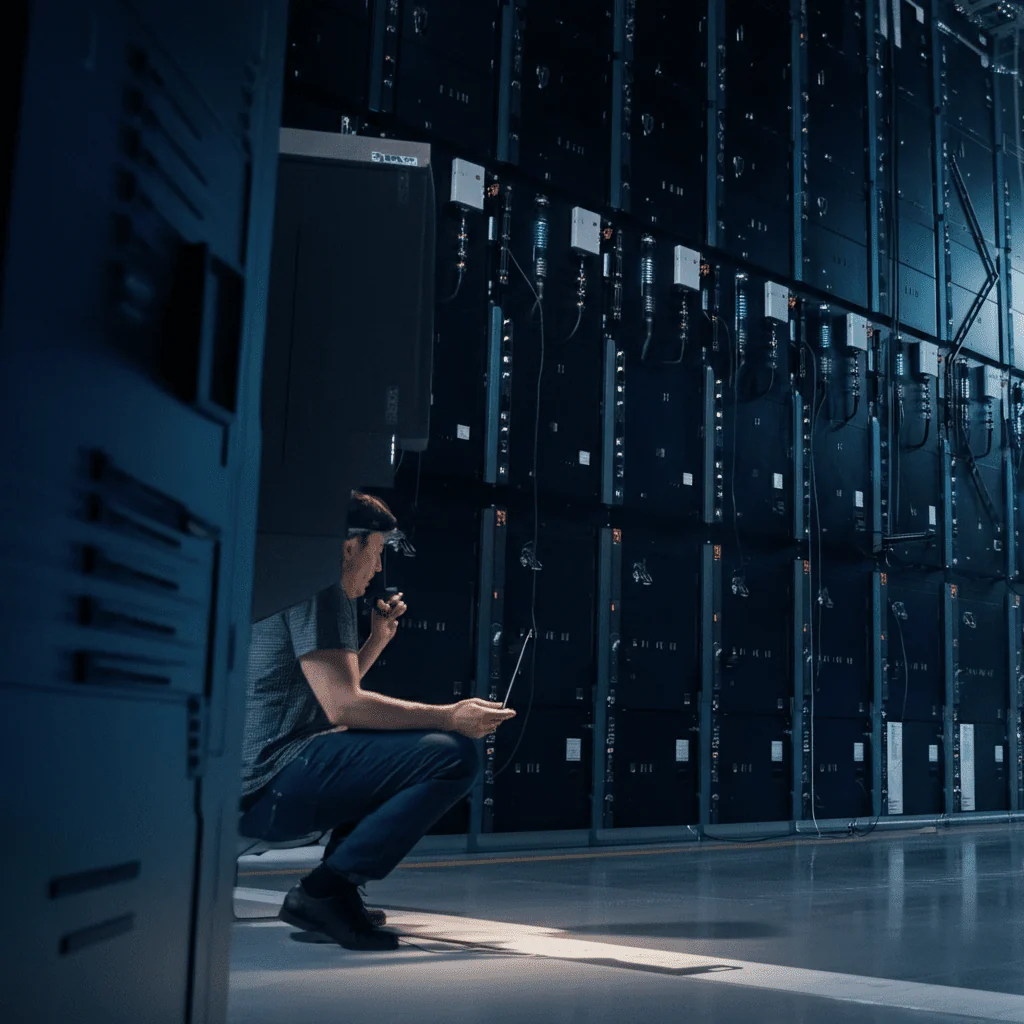
Elon Musk’s xAI has brought its massive Colossus 2 AI training cluster online, reportedly delivering over 1 gigawatt of compute power for large-model training and inference workloads. The design leverages custom GPU modules and high-capacity power infrastructure to support training at a scale typically seen only in the largest hyperscale clouds. The cluster’s capacity underscores xAI’s ambition to operate at the forefront of AI compute while providing an alternative to public cloud providers for large model development.
Why this matters for Industry 4.0:
AI workloads are no longer a niche backend service — they’re core to predictive maintenance, digital twins, quality inspection, and industrial optimization. A 1 GW training cluster signals not just more horsepower, but dramatically increased data throughput, training iteration rates, and model responsiveness. In practical terms, industrial AI models that once took weeks to train could now see results in hours. For manufacturers and operators, this translates to faster insights, more reliable models, and the infrastructure muscle to run AI workloads without compromise.
DeepHow Launches PharmaCloud to Standardize Operator Training & Execution in Regulated Manufacturing
DeepHow has introduced PharmaCloud, a purpose-built platform that helps regulated pharmaceutical manufacturers standardize, train, and verify operator execution across complex production environments. PharmaCloud captures real-time procedural execution and training data, then automatically analyzes it against validated standards to ensure consistent performance and compliance — a critical need in industries where mistakes can compromise safety, product quality, and regulatory standing.
Why this matters for Industry 4.0:
Manufacturers in highly regulated sectors like life sciences struggle with execution variability — even with digital SOPs — because frontline operators may interpret tasks differently or deviate under pressure. PharmaCloud turns execution itself into a data stream: capturing what actually happens, comparing it to what should happen, and flagging gaps for retraining or process improvement. This bridges digital workflows, operator training, quality control, and compliance into a unified, measurable system. For any factory leaning into digital transformation, that’s a model for how real-world work should be captured, verified, and improved — not just automated.
OpenAI Targets U.S. Hardware Manufacturing to Boost AI Stack Control
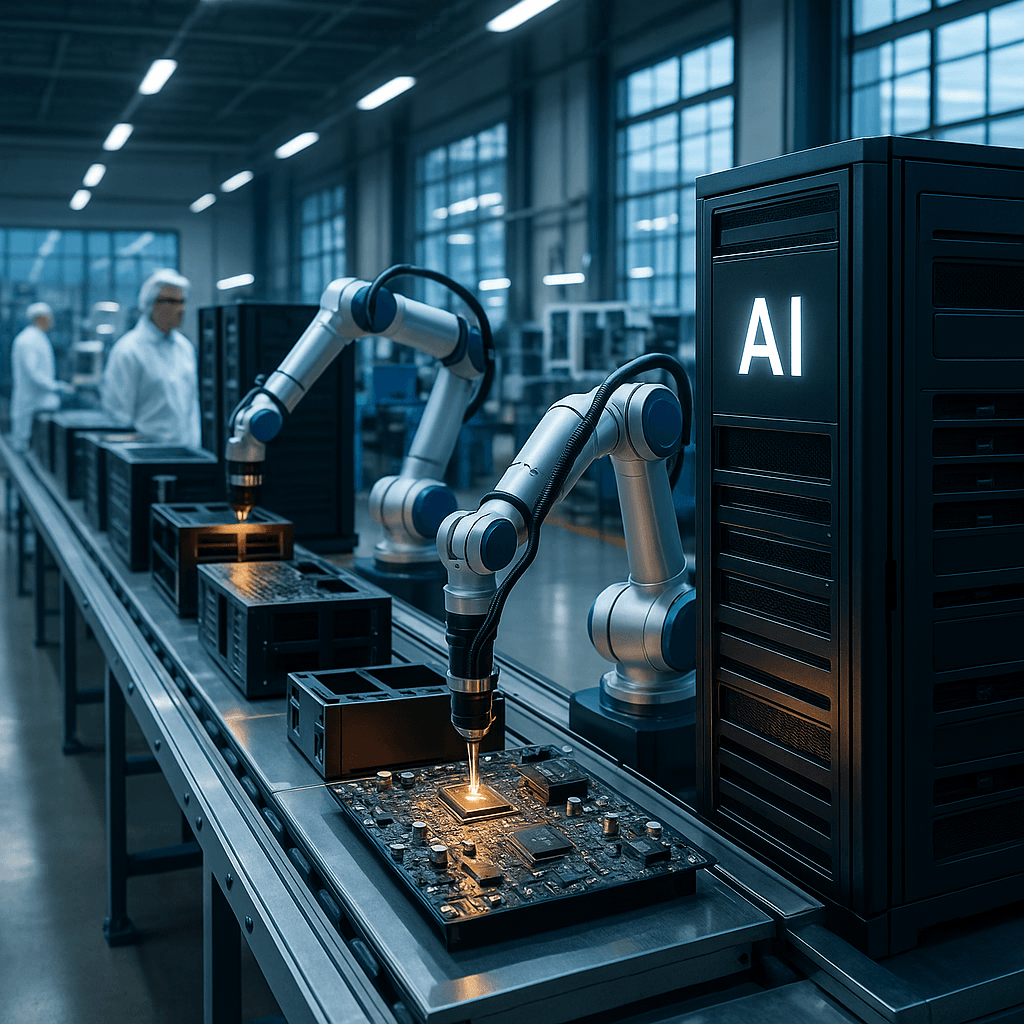
OpenAI is publicly outlining a strategy to expand U.S.-based hardware manufacturing for its AI systems, aiming to reduce dependence on overseas supply chains and tailor infrastructure for large-model workloads. The strategy includes deeper collaboration with domestic partners on custom silicon and AI-optimized compute, as well as investment in local production capabilities that align with national technology and economic goals.
Why this matters for Industry 4.0:
AI isn’t just software — it’s hardware-hungry software. For manufacturers and digital transformation leaders, OpenAI’s push toward U.S. hardware manufacturing signals a large shift: more compute designed for enterprise workflows, optimized for compliance, and built on supply chains that factories can access without geopolitical friction. This could mean better support for on-premise AI inference, edge-optimized AI modules, and more predictable procurement cycles for compute hardware — all of which lower barriers to deploying AI models in real industrial environments.
A Word from This Week's Sponsor

Canary Labs has been at the forefront of industrial analytics for decades — helping manufacturers turn raw time-series data into actionable insight at scale. Known for their deep historian expertise and advanced analytics engine, Canary enables teams to understand what’s happening in their processes and why — without ripping and replacing existing infrastructure.
At ProveIt! 2025, Canary Labs demonstrated how modern analytics can sit on top of operational data to deliver real-world value fast, from root-cause analysis to predictive insights that actually get used by operations teams.
Looking ahead to 2026, Canary Labs continues to push innovation in:
High-performance industrial data historians
Advanced analytics and pattern recognition
Seamless integration with OT, IT, and UNS architectures
Scalable analytics for quality, reliability, and performance improvement
Canary Labs isn’t just storing data — they’re helping manufacturers understand it, trust it, and act on it.
We’re proud to feature Canary Labs as a newsletter sponsor and as a sponsor of ProveIt! 2026.
Learn more about Canary here: www.canarylabs.com/
Try it Free here: Free Trial
Gas Town — A Multi-Agent AI Workspace Manager for Persistent Collaboration

Gas Town is an open-source workspace orchestration system designed to coordinate multiple AI agents (like Claude Code) working on different tasks, without losing context. Traditional workflows with autonomous AI assistants often struggle because each agent forgets its progress after a restart — but Gas Town persists work state in git-backed hooks so memory survives crashes and restarts. It also includes built-in agent mailboxes, identities, handoff mechanisms, and structured tracking units called “convoys,” letting you scale from a handful of agents to dozens with reliable visibility and coordination.
Why this matters for industrial AI workflows: In manufacturing and enterprise environments, multi-step AI tasks (like generating code, analyzing datasets, updating SOPs, or coordinating cross-system queries) often involve many interactions and intermediate results. Gas Town’s approach treats agents and their outputs as first-class citizens in a version-controlled workspace, reducing context loss and making agent progress auditable and reproducible. For teams building internal automation, quality-inspection pipelines, or collaborative AI tooling, this model offers a way to tame complexity when multiple assistants need to share work, state, and goals.
Learning Lens

New Year, New Skills — 25% Off Everything at IIoT University
If "level up our operations" made it onto your 2026 goals list, here's the push you need to actually make it happen.
Digital transformation doesn't start with a platform purchase or a vendor contract. It starts with education — understanding the architecture patterns, the integration strategies, and the operational realities that separate successful implementations from expensive disappointments.
That's why we're kicking off the new year with 25% off everything at IIoT University — courses, workshops, and yes, the Digital Factory Mastermind program.
Why this matters:
The gap between manufacturers who are thriving with Industry 4.0 and those still struggling isn't budget or technology — it's knowledge. The teams that understand UNS architecture, know how to scope an integration project, and can speak the language of both OT and IT are the ones actually shipping results.
Whether you're an engineer trying to build the business case for your first UNS pilot, a leader trying to upskill your team, or someone who's been meaning to dig deeper into MCP and agentic AI — there's no better time than right now.
New year. New skills. Same mission: get your plant to where it needs to go.
Use code NEWYEAR at checkout for 25% off any product.
👉 Browse courses and programs at IIoT University
Byte-Sized Brilliance
The Data Center Is the New Factory Floor
A single modern hyperscale data center can consume as much electricity as 80,000 homes — which means today’s “digital factories” often have a bigger energy footprint than the plants they support. In fact, some utilities now plan grid upgrades around data center construction the same way they once did for steel mills and automotive plants.
Turns out the machines making AI smarter don’t run on magic — they run on power, cooling, and infrastructure that looks a lot like old-school manufacturing… just with fewer sparks and more fiber.
 |
|
|
|
|
|
|
|

Responses