

Presented by

AI Is Getting Smarter. The Factory Floor Didn't Get the Memo.
We're barely a week into November, and apparently nobody told the technology industry to slow down. AI is getting smarter, robots are getting jobs, and manufacturers are being asked to do more with less. You know, just another normal week in Industry 4.0.
Lear is building a highly automated factory in Michigan that it hopes to replicate around the world. Meanwhile, AI is moving beyond generating reports and pretty dashboards toward actually influencing what happens on the plant floor. That's exciting, assuming the machines and the software can agree on what's supposed to happen.
Of course, the bad guys aren't taking the week off either. Cybercriminals are targeting industrial refrigeration systems, because apparently keeping hackers out of your network wasn't enough. Now we've got to worry about keeping the ice cream frozen, too.
And while Wall Street continues debating whether we're spending too much money on AI, American manufacturers are seeing increased demand for the equipment needed to power it all. Turns out, even artificial intelligence needs a whole lot of very real infrastructure.
Here's the thing: You can have the smartest AI, the fanciest robots, and all the computing power money can buy. But if the systems don't work together, the infrastructure isn't secure, or the investment doesn't solve a real problem, what have you actually accomplished?
Here's what caught our attention this week:
Lear Is Building the Factory of the Future. And It Wants to Copy It Everywhere.
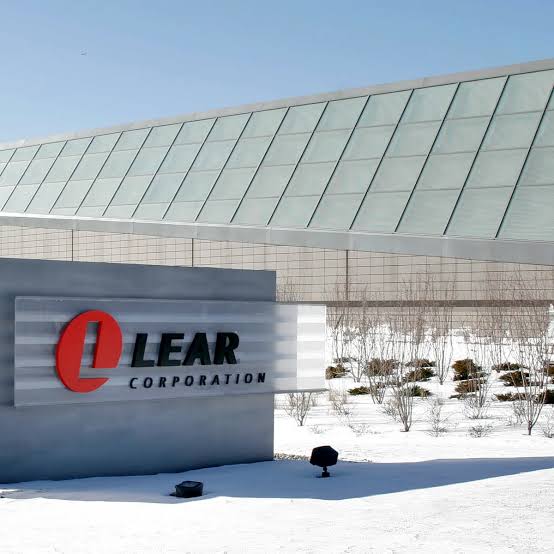
Everybody talks about building the factory of the future. Lear Corporation is putting its money where its mouth is.
The automotive seating manufacturer is building a highly automated facility in Orion, Michigan, that it plans to use as a blueprint for factories across its global operations. And this isn't just about adding a few robots to an assembly line. Lear is rethinking how materials, machines, software, and people work together across an entire facility.
The details:
During its October 30 earnings call, Lear CEO Raymond Scott outlined plans for the Orion facility, which is expected to begin production in 2027.
The plant will manufacture seating for three General Motors vehicles: the Cadillac Escalade, Chevrolet Silverado, and GMC Sierra.
Here's some of the technology going into the facility:
-
Automated storage and retrieval: Two separate systems will handle raw materials and finished goods.
-
Autonomous material handling: Automated guided vehicles (AGVs), autonomous mobile robots (AMRs), and overhead delivery systems will move components throughout the plant.
-
AI-powered vision inspection: Automated inspection will help identify production defects and improve quality control.
-
Intelligent production scheduling: Proprietary software will monitor cycle times and help adjust production activities.
-
Automated testing and shipping: Smart ovens, end-of-line testing, and automated trailer loading will connect production through outbound delivery.
Lear calls its approach integrated intralogistics, bringing inventory, material movement, storage, and production decisions together into a connected system.
The company estimates that automation could reduce its manufacturing conversion cost requirements by 10% to 15%. That's a projection, not a demonstrated result yet.
Why it matters for manufacturing:
Here's what makes this interesting: Lear isn't treating automation as a collection of individual projects.
Instead of automating one machine, one production line, or one warehouse operation, it's looking at how the entire manufacturing process works together.
Think about the difference.
You can install an autonomous mobile robot to move materials between workstations. But if that robot doesn't know what the production schedule requires, which materials are available, or when a line is about to run out of components, you've automated transportation without necessarily improving the overall operation.
The real value comes when the systems coordinate with one another.
Here's how this works on the factory floor:
Imagine a production line running ahead of schedule. The material handling system recognizes that additional components will be needed sooner than expected.
Instead of waiting for an operator to request a delivery, the system could coordinate inventory availability, storage retrieval, and material movement to keep production supplied.
That requires accurate production data, contextualized information, reliable connectivity, and clearly defined relationships between systems.
Sound familiar? These are the same architectural challenges manufacturers face when building connected operations and Unified Namespace environments.
The bottom line:
Lear's Orion facility is an ambitious example of moving beyond isolated automation toward coordinated manufacturing operations.
But the real test comes when production begins in 2027. Can Lear achieve its projected cost reductions, and can it replicate the approach across multiple facilities?
The technology is impressive. The ability to scale it is what will make this story worth watching.
Read the full article — Manufacturing Dive
Hackers Are Messing With Industrial Freezers. Yes, Really.
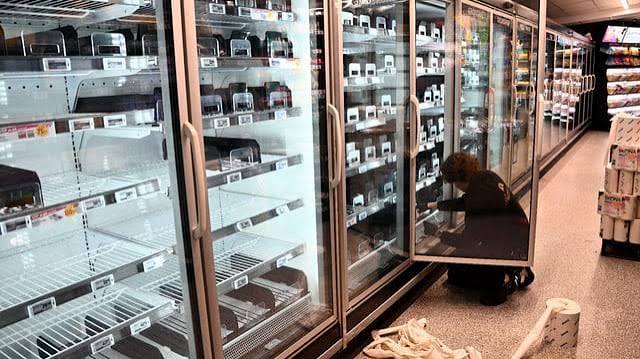
Imagine showing up to work Monday morning and discovering that someone halfway around the world decided your refrigeration systems needed a little less refrigeration.
Sounds ridiculous, right? Unfortunately, it's happening.
On November 5, the FBI and the Cybersecurity and Infrastructure Security Agency (CISA), along with three other federal agencies, issued a warning about cyberattacks targeting industrial refrigeration and cold-chain monitoring systems.
And we're not just talking about a few spoiled cartons of milk. These systems protect food supplies, pharmaceuticals, medical products, and temperature-sensitive materials across multiple industries.
The details:
Attackers are targeting internet-accessible refrigeration controllers and temperature monitoring systems, exploiting vulnerabilities and weak security configurations to remotely manipulate equipment.
The reported activity includes:
-
More than 115 supermarkets across six European countries affected by attacks that disrupted cooling systems and raised temperatures.
-
Three French blood storage facilities where attackers altered refrigeration settings through a compromised equipment provider.
-
Temperature manipulation: Attackers can force equipment into heating or defrost cycles, potentially destroying inventory or damaging equipment.
-
Loss of visibility: Compromised systems may stop accurately reporting temperatures, leaving operators unaware that something is wrong.
The federal warning identifies authentication bypass vulnerabilities, code injection, and weak configurations as potential attack methods.
Why it matters for manufacturing:
Here's the part that should get every plant engineer's attention.
These aren't traditional IT systems storing emails and spreadsheets. They're operational systems controlling physical equipment.
A refrigeration controller might seem like a relatively simple device. It monitors temperatures, controls compressors, and manages defrost cycles.
But connect that controller to the internet without appropriate protections, and suddenly someone outside your organization could potentially influence what happens inside your facility.
That's the difference between an IT security incident and an OT security incident. The consequences can become physical.
Here's how this could play out on the factory floor:
Imagine a food manufacturer operating a refrigerated warehouse containing several million dollars in temperature-sensitive inventory.
The facility uses connected refrigeration controllers so technicians can monitor conditions remotely.
An attacker compromises one of those controllers and changes its operating parameters. The cooling system stops maintaining the required temperature, but the monitoring application continues showing outdated or inaccurate readings.
By the time someone notices, the inventory may already be outside acceptable storage conditions.
The manufacturer isn't just dealing with a cybersecurity problem anymore. It's facing potential product loss, quality investigations, production interruptions, and customer delivery issues.
What should manufacturers do?
CISA and its federal partners recommend several immediate actions:
-
Identify refrigeration controllers and monitoring systems exposed to the public internet.
-
Remove unnecessary remote access and secure connections that must remain available.
-
Replace default credentials and implement strong authentication.
-
Apply available firmware and software security updates.
-
Segment OT systems from business networks and establish independent safeguards for critical temperature limits.
And don't stop at refrigeration equipment. The same principles apply to boilers, HVAC systems, water treatment equipment, and other connected industrial assets.
The bottom line:
The lesson isn't that refrigeration systems are uniquely dangerous. It's that any internet-connected device capable of controlling a physical process deserves the same security attention as the rest of your industrial infrastructure.
Because discovering that someone hacked your freezer is bad enough. Discovering it after you've lost an entire warehouse of product? That's a very expensive lesson.
Read the full report — BleepingComputer
Read the November 5 federal cybersecurity advisory
Sponsor Message

Your Production Data Stopped Updating. Now What?
Sponsored content with Paessler
Your production dashboard hasn't updated in 20 minutes. The machines are still running, but somewhere between the plant floor and your applications, the data has stopped moving.
Is it the PLC? A network switch? An OPC UA server? Or maybe a database that's running out of resources?
Knowing your data stopped flowing doesn't necessarily tell you why.
Manufacturers invest heavily in connecting equipment, building Unified Namespace architectures, and making operational data accessible. But the infrastructure supporting those connections needs just as much attention.
SCADA tells you what's happening with your process. MES tracks production execution. Infrastructure monitoring helps you understand whether the networks, servers, and communication services supporting those systems are healthy.
That's where Paessler comes in. Its PRTG platform provides visibility across IT, OT, and IIoT infrastructure, helping teams identify connectivity issues and monitor the health of critical systems.
The takeaway: Connecting your factory is one thing. Keeping those connections healthy and reliable is another.
Explore industrial infrastructure monitoring
See how infrastructure monitoring works
AI Is Expensive. American Manufacturers Are Cashing In.
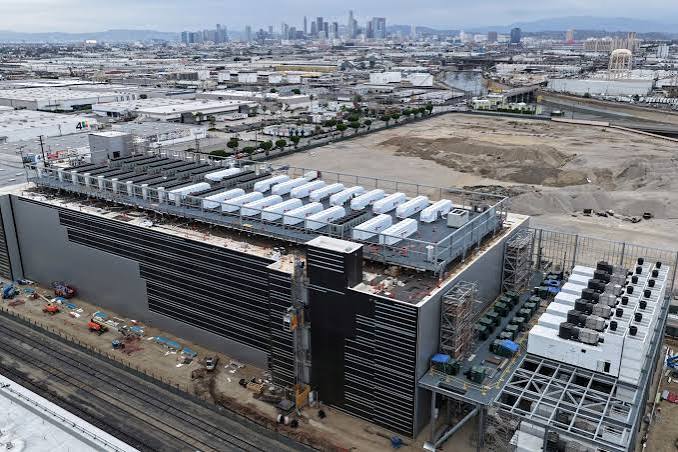
For months, we've been hearing about the billions of dollars technology companies are pouring into artificial intelligence. Data centers, GPUs, servers, power infrastructure. The spending numbers are enough to make your accountant reach for the aspirin.
But here's something interesting: All that artificial intelligence requires an enormous amount of very real, physical equipment. And somebody has to manufacture it.
According to new manufacturing data released November 2, demand for AI-related infrastructure is helping drive a resurgence in American factory activity.
The details:
The Institute for Supply Management (ISM) reported that U.S. manufacturing expanded in October for the tenth consecutive month, with production reaching its strongest level since November 2021.
A few numbers worth paying attention to:
-
Manufacturing PMI: 55.5, up from 54.5 in September. Anything above 50 indicates expansion.
-
Production Index: 59.0, reflecting a significant acceleration in manufacturing output.
-
New Orders Index: 55.5, indicating continued growth in demand.
-
Computer equipment orders: Up 27% year over year in September, reflecting strong investment in servers, storage systems, and related hardware.
S&P Global's October manufacturing survey also identified strong demand for AI-related products and equipment as a major contributor to factory activity.
But there's a catch.
Manufacturers are struggling to keep up with demand, and supply chains are feeling the pressure. Components are becoming harder to source, supplier deliveries are slowing, and higher material and energy costs are squeezing operations.
Why it matters for manufacturing:
Here's the irony. While the technology industry debates whether AI investments will generate sufficient returns, manufacturers are already being called upon to produce the infrastructure making those investments possible.
Think about everything required to build and operate a modern data center.
Servers need processors, memory, circuit boards, and enclosures. Electrical systems require transformers, switchgear, cables, and power distribution equipment. Cooling systems need pumps, heat exchangers, sensors, and controls.
And that's before considering the factories, automation systems, and industrial equipment needed to manufacture all those components.
AI might live in the cloud, but the cloud is built out of physical stuff.
Here's how this plays out on the factory floor:
Imagine you're a manufacturer producing electrical components used in data center construction.
Your order book is growing, customers want shorter lead times, and production capacity is already stretched.
Adding another shift might help temporarily. But what happens when critical components are delayed, equipment availability becomes a bottleneck, or production schedules change faster than your teams can respond?
This is where connected manufacturing becomes valuable.
Real-time production visibility, accurate inventory data, coordinated scheduling, and reliable equipment monitoring can help manufacturers make better decisions about capacity and delivery commitments.
Of course, technology alone won't solve every supply chain constraint. But understanding what's happening across your operation is a good place to start.
The bottom line:
Artificial intelligence may be transforming the digital world, but its infrastructure demands are creating very tangible opportunities and challenges for manufacturers.
And as demand continues to grow, the manufacturers that can increase output without losing control of costs, quality, and delivery will be better positioned to take advantage of it.
Explore the October 2026 ISM Manufacturing Report
From the Floor: A Week in the Community
It was a quieter week in the Industry 4.0 Community, but that doesn't mean there wasn't anything worth talking about. New faces joined the conversation, practical integration challenges surfaced, and we got another reminder that some of the best technical discussions start with a simple question.
When OEM Equipment Doesn't Play Nice
In #🔗-content-links, members shared a video from Platwide Integration exploring a familiar manufacturing headache: integrating OEM equipment when the controls aren't complete or the available interfaces don't provide everything you need.
Anyone who's tried connecting a collection of machines from different manufacturers knows the challenge. Getting equipment to communicate is one thing. Getting useful, reliable data out of it is another.
Inside the Stack With Flow Software
The #📺-content-feed channel featured our November 3 Problem Solvers: Inside the Stack session with Flow Software.
The discussion explored how industrial data can become more useful when the relationships between assets, processes, and information are modeled instead of treating everything as isolated tags and timestamps.
Got a Problem? Bring It to the Floor.
Here's something we'd love to see more of: real questions from real projects.
Struggling with MQTT topic structures? Trying to connect a stubborn OEM machine? Wondering how AI fits into your MES architecture?
Bring it to the community. Chances are someone has already fought that battle, and the lessons learned might save you a few headaches.
Not in the conversation yet? Join the Industry 4.0 Community Discord and get involved.
Byte-Sized Brilliance
AI Lives in the Cloud. The Cloud Has an Electric Bill.
Here's a number that'll make you look twice: 945 terawatt-hours.
That's how much electricity the world's data centers are projected to consume annually by 2030, according to the International Energy Agency. For perspective, that's slightly more electricity than the entire country of Japan consumes today.
And that's just the data centers.
All those AI models need servers, cooling systems, power distribution equipment, networking infrastructure, and the factories that manufacture it all. Turns out, the cloud isn't nearly as weightless as the name suggests.
For manufacturers, there's an interesting opportunity here. As demand for AI infrastructure grows, so does the need for electrical equipment, industrial components, cooling technology, and the automation required to produce them.
The irony? We're building incredibly intelligent digital systems, but none of them work without some very physical infrastructure keeping the lights on.
Source: International Energy Agency — Energy and AI

Responses