

Presented by

Live this Tuesday, October 27 at 12:00 PM CT (1:00 PM ET): Walker Reynolds and Tiger Data. Details in the Sponsor Message below.
Happy October 26th, Industry 4.0!
Halloween is Saturday, which means the kids are gitty to get their free candy and wear that constume they begged you to get, and the teens are preparing to TP the neighbors house (do they even do that anymore?) Now the biggest hurdle will be trying to tell a 5 year olds that no, they can't eat an entire bucket of candy in 1 sitting.
Anyways, let's move on from the spooky festivities. This week is about the gap between what's announced and what's ready. A MES vendor is putting AI agents inside the system your supervisors already live in. Hyundai's timeline is a useful reality check on the humanoid hype. And underneath both stories sits the question nobody wants to put in the budget: who trains the people who have to run all of it?
Grab your coffee. Here's what caught our attention:
Your MES Is Getting AI Agents. The Interesting Part Is the Guardrails.
Critical Manufacturing released Version 12.0 of its Industrial Operations Platform on October 20, and the headline feature is AI agents that build dashboards and answer production questions in plain English. (Disclosure: this is the vendor's own press release, so the claims are theirs, and we haven't tested any of it.)
The details:
- Ask agents: Answer natural-language questions using manufacturing context, including product definitions, resources, and production flows. Purpose-built versions cover KPI and trend analysis and shift handovers
- Build agents: Generate dashboards and UI pages, so teams can create operational views without waiting on a specialized developer
- Configuration, not code: Agent-built dashboards are governed configuration. They can be versioned, validated, carried through upgrades, and edited by hand or refined through conversation
- Grounded in the data model: The agents run on the platform's Canonical Data Model, so answers reflect production context instead of raw tables
- Beyond AI: A new add-on, Global Data Orchestrator, syncs master data across sites using change packages with dry-run validation. User Workspaces give operators, supervisors, and quality managers role-based views
- Availability: Included in Version 12.0. It's aimed at semiconductor, electronics, medical device, and industrial equipment makers. The release doesn't mention pricing
Why it matters: Here's the thing about AI inside a MES: the model isn't the hard part. Trust is. A dashboard an AI built last Tuesday has to survive an upgrade, pass validation, and hold up when your quality manager gets asked about it in an audit. "Configuration you can version" is a very different promise from "code a chatbot wrote."
Translation: the vendor is selling AI that leaves a paper trail. The dry-run validation on master data changes comes from the same instinct: check it before it touches production.
Real-world scenario: Imagine your night-shift supervisor typing, "What changed on Line 4 since the last handover?" The answer is only as good as the data model behind it. If the MES knows which product, which resource, and which step, the summary is useful. If your routings and master data are a mess across three plants, the agent will confidently summarize the mess.
What to do this week:
- Ask your MES vendor where agent answers come from (a governed data model or raw tables) and whether agents can only read or can also write
- Ask whether anything an agent builds is versioned and survives upgrades
- Pick one narrow job, like shift handover summaries, and test it against a day where you already know what happened
- Audit your master data first. If two plants name the same resource differently, fix that before you blame the AI
Keep it honest: There are no customer results in the release yet, so treat the capabilities as claims until someone you trust has run them on a real line.
The bottom line: An AI that answers questions is a demo. An AI whose work you can version, validate, and roll back is a system. Ask which one you're buying.
Hyundai Puts a Date on Humanoids in Its Factories: After 2032
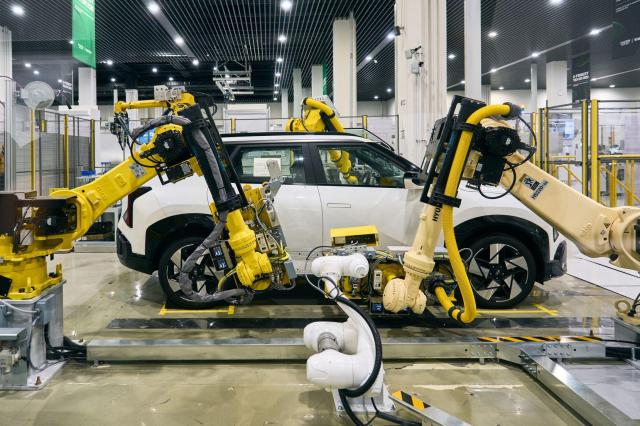
Courtesy of Hyundai Motor Group, via Aju Press
Hyundai Motor Group says humanoid robots will join its new factories after 2032, and the road there runs through a test plant in Singapore.
The details:
- The plan: Develop autonomous manufacturing systems at its Singapore Innovation Center (HMGICS) by 2030, then bring humanoids and full-scale automation to future plants after 2032
- The proving ground: HMGICS is the testbed before the technology expands to Metaplant America in Georgia and the Ulsan EV plant
- The shift: Away from conventional robots that repeat welding and painting, toward "physical AI," meaning robots that perceive their surroundings and make decisions
- The target tasks: Connecting in-vehicle wiring, supplying interior trim, and paint touch-ups, all jobs that have been hard to automate with existing technology
- The supporting tech: Hyundai is also developing digital twins to simulate factory operations and catch problems early
- The stated goal: Move workers away from dangerous and repetitive tasks and toward production management and quality improvement
- On display: Roughly 200 manufacturing technologies at E-FOREST Tech Day 2026 (October 19 to 21)
Why it matters: Every week brings another humanoid demo video. Here's one of the world's largest automakers putting humanoids in its plans for after 2032. These are stated targets from the company, not commitments, but notice the order: autonomous systems and digital twins first, humanoids later.
Translation: the robot is the last step. The data is the first. Digital twins, consistent tags, and documented tasks are what any future robot will need, and they pay off today with the AMRs, vision systems, and AI agents you can already buy.
Real-world scenario: Imagine your CEO coming back from a conference and asking, "Should we be budgeting for humanoids?" The useful answer isn't yes or no. It's: "Not yet, but we should be building what they'd need." That means a clean model of how the cell actually runs, and data around it that someone can trust.
What to do this week:
- Pick one awkward, variable manual task on your floor (Hyundai's examples are wiring, trim, and touch-ups) and write it down step by step
- Ask whether you have a digital model of that cell, even a simple one
- Check that the machine and tag data around that task is named and timestamped consistently
- Put "physical AI" on a three-to-five-year watchlist, with the trigger being pilots at peer plants, not press releases
Heading to Illinois? The ASSEMBLY Show runs October 27 to 29 in Rosemont. Hyundai Motor Group Metaplant America receives ASSEMBLY magazine's Plant of the Year Award on October 28 at 9:00 a.m., followed by an "AI in Manufacturing" keynote panel. Details here.
The bottom line: Humanoids are a 2032 story. The data work that makes them useful is a this-quarter story.
Sponsor Message
Plain PostgreSQL vs. PostgreSQL + TimescaleDB for industrial time-series data: watch both get put to the test.
Every PLC tag, sensor, and machine state on your floor writes a new reading every few seconds. Multiply that by a year of history and you land on the question every IIoT team eventually faces: where does all of it live, and what's the difference between plain PostgreSQL and PostgreSQL + TimescaleDB when it does?
This Tuesday, Walker Reynolds and Doug Pagnutti, Developer Advocate at Tiger Data, go live to find out. Walker builds an industrial historian on PostgreSQL and visualizes the data in Grafana, then introduces TimescaleDB to compare performance, data resolution, and scalability. They'll put both approaches to the test and show where TimescaleDB delivers value for manufacturers and system integrators.
- Session: Problem Solvers: Inside the Stack w/ Tiger Data
- When: Tuesday, October 27 at 12:00 PM CT (1:00 PM ET)
- Who: Walker Reynolds (4.0 Solutions) and Doug Pagnutti, Developer Advocate at Tiger Data
- Where: Live stream on YouTube. https://youtube.com/live/teZIhraG2MI
Want to try it on your own data? Tiger Cloud is Tiger Data's fully managed PostgreSQL built for time-series, so your team keeps the SQL it already knows. New accounts get $1,000 in credit, valid for 30 days, with no credit card required. New accounts only.
Create an account and get $1,000 in credit →
Automation Raised the Skill Bar. Did Anyone Budget for the Training?
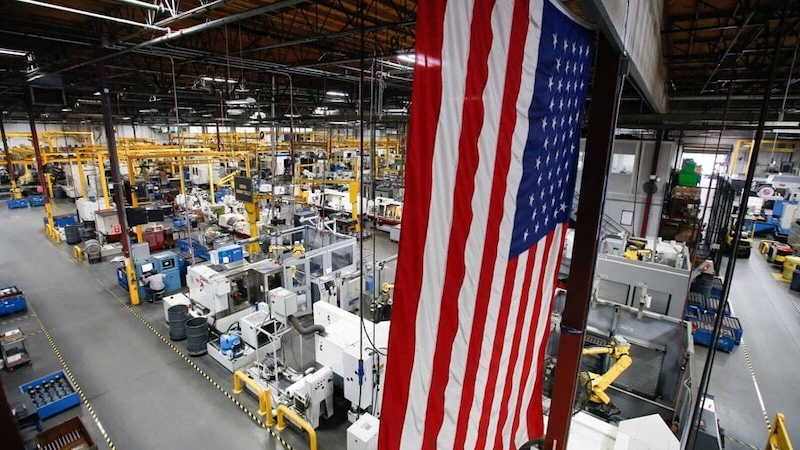
A piece from Robotics & Automation News makes a point most plants already feel: machines are going in faster than people are being trained to run them.
The details:
- The gap: Automation raises the skill bar faster than training programs can adapt, leaving what the article calls "a quiet but growing gap" between installed machines and operator skills
- Why classrooms struggle: Multi-shift, multi-site plants can't easily pull people off a running line, and turnover keeps the need constant
- Skills in demand: Operating and monitoring automated lines, maintenance and diagnostics (fault codes, preventive maintenance), working safely beside collaborative robots, and basic programming, parameter adjustment, and data monitoring
- The recommended fix: Blended training. Use e-learning for knowledge like system operation, safety, and procedures, and save scarce hands-on and simulation time for physical skills. Reskill experienced workers, train new hires consistently, and plan the training budget alongside the hardware
- The numbers the article cites: The International Federation of Robotics counted 542,076 industrial robots installed in a single year, and the global factory robot population has more than doubled in a decade. Deloitte and The Manufacturing Institute project a need for 3.8 million manufacturing workers by 2033, with up to 1.9 million jobs possibly going unfilled if the skills gap isn't addressed
Why it matters: Look at the other two stories in this issue. An MES agent that answers questions is only useful to a supervisor who knows when to doubt the answer. A robotic cell is only as good as the tech who can read its fault code at 2 a.m. Every new capability in this issue arrives with a training line item that wasn't in the original quote.
A quick disclosure: the article names a training provider, Blue Carrot, as an example of buying content. Read it as a perspective piece, not neutral research. The core point holds up either way.
Real-world scenario: Line 2 gets a new robotic palletizer. The integrator trains two people for two days. Six months later, one of them has moved on, the other is on vacation, and a fault code is blinking on a machine nobody on third shift has touched. Imagine your maintenance supervisor asking, "Who's actually certified on this?" If the answer is "whoever has the PDF," that's the gap.
What to do this week:
- Make training part of every equipment and software quote: ask for hours, format, and a refresh plan up front
- Build a simple skills matrix showing who can run, troubleshoot, and program each system, by shift
- Turn your top ten "ask Dave" fixes into short checklists or videos, so one person's experience stops being a single point of failure
- Split the work: e-learning for procedures and safety, hands-on and simulation time for the physical skills
The bottom line: Every machine you buy comes with a training bill. The only choice is whether you pay it before the first fault code or after.
From the Floor: A Week in the Community
From October 16 to October 26, the 4.0 Solutions / Industry 4.0 Discord was in a building mood: a new member's open-source project picking up contributors, a local AI model poking at a PLC with no cloud in sight, and a knowledge-graph argument that needed a plain-English translation.
From new member to project maintainer in two weeks: Michael Frost has been building fss-mqtt, an open-source terminal UI for MQTT (we flagged his projects last week). By October 22 it had turned into a real contribution cycle across #💬-general, #ignition, and #mqtt. Ganapathi forked the repo, Emanuel suggested filing GitHub issues to track the work, someone built an Arch Linux package, and Michael said he plans to reverse-engineer Elspec's pqzip format. That's the community at its best.
A local model found a PLC, no cloud required: On October 21, a member reported that a 9-billion-parameter model running on a gaming PC discovered a PLC's OPC UA server with no cloud and no internet connection, and others confirmed the approach scales to larger OPC UA information models. Elsewhere in #ai-and-ml, mellamomark said he plans to try Muse Spark Open, and interest in local and open-weight models kept building.
Do you need an ontology before a knowledge graph? On October 21, members picked apart LinkedIn posts that criticized Industry 4.0 APIs and misrepresented knowledge graphs. By October 22 it had become a full debate on whether a formal ontology like ISA-95 is a prerequisite for a knowledge graph at all. One member asked for the argument in plainer terms, which is the right instinct. No final verdict yet, so if you've built one, weigh in.
Friday Wins (October 16):
- Ultrashock: Their team was shortlisted for Start Up of the Year at the Energy Storage Awards in London
- Steve Guerard: Got IT to acknowledge OT's role in the MES layer. Small sentence, big win
Also worth a look: A member on a 4 GB RAM machine asked for free PLC, HMI, and simulation tools and got a solid list: OpenPLC Editor, CODESYS, Ignition, Node-RED or Python with Modbus, and Matlab/Simulink through a university. Geoffnunan showed a Daily Operations Meeting app built with Claude Code that needed user-defined schema extensions. The "drawbridge design" for manufacturing resiliency without internet came up on October 22, along with what it means for SaaS selection. And an Ignition plus Snowflake cost question landed in #ignition.
Not in the room yet? Come hang out in the Discord → That's where the real work gets argued out.
Byte-Sized Brilliance
The Word "Robot" Was Invented for a Play, and It Means "Forced Labor"
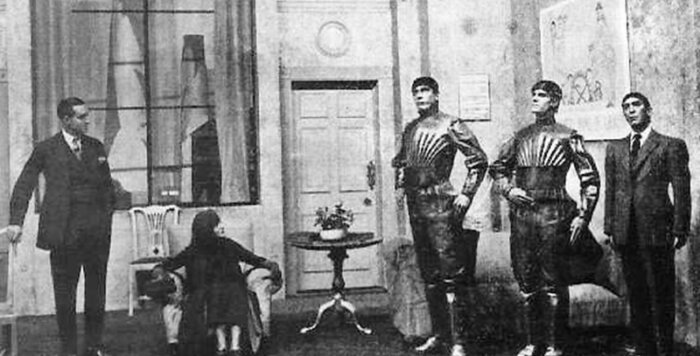
Cover of the first edition of R.U.R. (Prague, 1920), designed by Josef Čapek. Image via The MIT Press Reader
The word "robot" first reached the public in R.U.R. (Rossum's Universal Robots), a Czech play by Karel Čapek published in Prague in 1920 and staged in early 1921. Karel later credited his brother Josef with coming up with the word. It comes from the Czech robota, the forced labor serfs owed their landlords, which traces back to a root meaning "slave."
Here's the twist: Čapek's robots weren't machines. They were artificial people, made in a chemical and biological sense rather than a mechanical one, built to do the work humans didn't want to do.
That makes this week's stories a funny bookend. We've spent a century picturing the robot as a worker that replaces workers. Hyundai's stated goal is the opposite framing: move people off dangerous, repetitive jobs and into production management and quality. And the training story covers what the play never bothered with. Somebody has to teach the humans to work alongside the thing.
The word started out meaning work nobody chose. The factories worth building are the ones where people choose the work that's left.
Sources: The MIT Press Reader, "The Czech Play That Gave Us the Word 'Robot'"; Wikipedia, "R.U.R." (for Karel Čapek's attribution of the word to Josef).

Responses